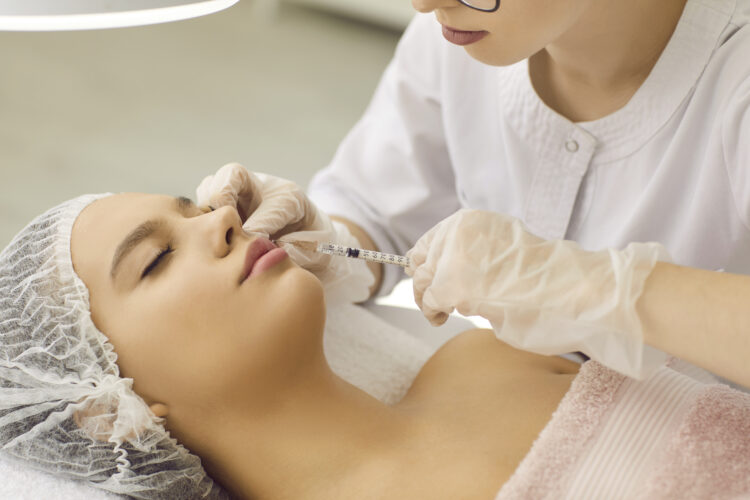
Domestic botulinum toxin companies are racing towards the Chinese market. With Hugel, which entered China first, leading the way, Jongkundang Bio and Huons Biopharma are in the final stages of product launch procedures. Attention is focused on what results these two companies will achieve in China, where Daewoong Pharmaceutical has knocked on the door for years with Nabota but has not yet entered.
According to the electronic disclosure system, Jongkundang Bio recently received the phase 3 topline data confirming the safety and efficacy of T-MBUS (Clostridium botulinum toxin type A, CU-20101), a treatment for severe glabellar lines.
T-MBUS has been confirmed to show comparable efficacy and safety levels to AbbVie's Botox. The improvement in glabellar lines was 74% for T-MBUS and 74.9% for Botox. The incidence of mild adverse reactions after a single administration was 53% for T-MBUS and 51% for Botox, with no significant difference in side effects, which were 2.5% for T-MBUS and 2.9% for Botox. Adverse effects during repeated administration were also found to be manageable. Jongkundang Bio plans to submit a product approval application to the Chinese regulatory authorities with the clinical results report.
T-MBUS's strength lies in its use of non-animal-derived ingredients to minimize side effects. A Jongkundang Bio official stated, "We completely exclude human serum-derived components (HSA) and animal-derived components from the manufacturing process to the finished product, making it the only toxin in the world to receive halal certification," adding, "It has differentiating factors from products already approved in China." They did not disclose the approval and market launch timeline.
Huons Biopharma is poised to enter the Chinese market as the second domestic company after Hugel. The company announced on the 9th that its Chinese partner, iMaker Technology, received registration approval from the National Medical Products Administration (NMPA) for its botulinum toxin product, 'Hutox.' A Huons Biopharma official stated, "We plan to utilize the network that our partner, iMaker Technology, has across China," and added, "We will increase our market share through rapid and stable supply."
China is considered the largest toxin market in Asia. According to global market research firm Grand View Research, the Chinese market is expected to grow from $732 million (approximately 1 trillion won) in 2024 to $2.028 billion (approximately 2.96 trillion won) by 2033. It accounts for 6.1% of the global botulinum toxin market and is expected to lead the Asia-Pacific market.
As a result, many global pharmaceutical companies have already entered the market. Botulinum toxins that have received marketing approval in China include AbbVie's Botox, Lanzhou Bio's Hengli, Ipsen's Dysport, Hugel's Letibot, Merz's Xeomin, and Israel's Sisram Medical Technology's DaxibotulinumtoxinA.
Hugel, which was the first to enter the domestic market in 2020, is steadily increasing its market share and is evaluated to be in the top three. The number one in sales in China is AbbVie, followed by Lanzhou Institute, with Hugel reportedly holding about 15% market share.
Regarding Hugel's rise to third place in just five years since entering China, a Hugel official stated, "Hugel's Letibot is positioned as a cost-effective option with quality comparable to AbbVie's high-priced toxin, sitting between AbbVie and Lanzhou Institute's low-priced toxin."
Additionally, utilizing distribution networks through local companies is cited as one of the reasons for rapidly expanding the market. A Hugel official stated, "We have focused on local physician training in collaboration with our local partner, Sahwan Pharmaceutical."
Among domestic companies, Daewoong Pharmaceutical submitted a product approval application for Nabota to the NMPA in December 2021, but after 3 years and 7 months without approval, it voluntarily withdrew. Medytox is currently preparing to enter the Chinese market.