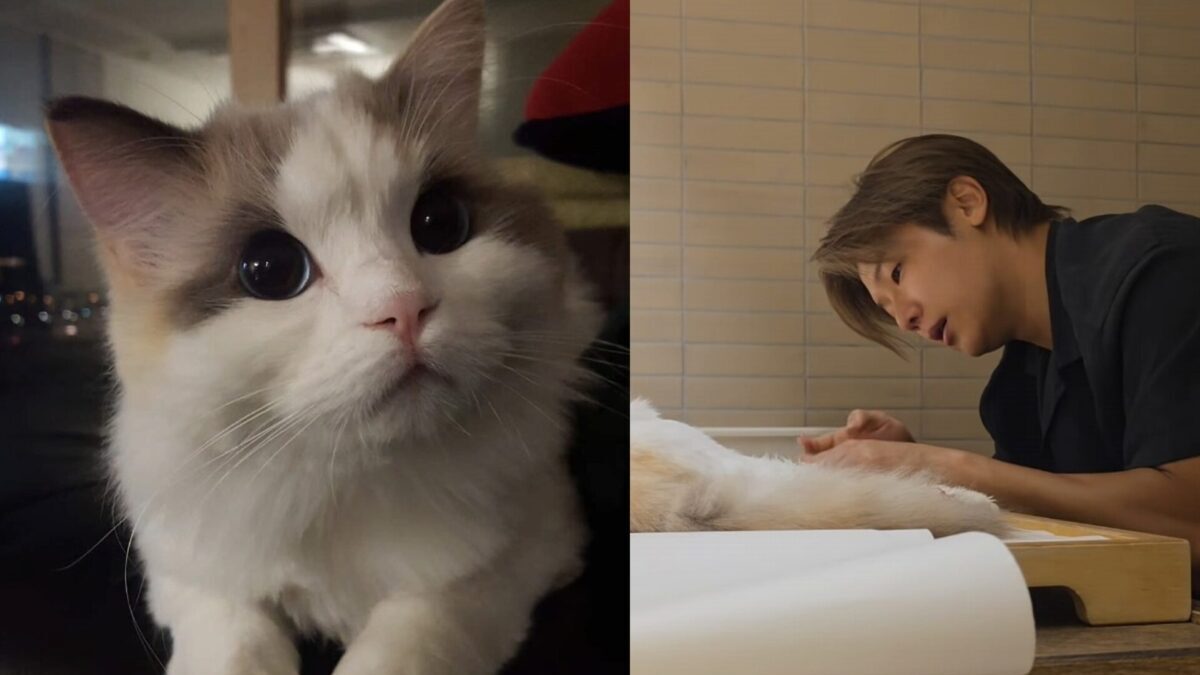
CNBLUE member Kang Min-hyuk has shared a heartfelt message bidding farewell to his pet cat, Chichi, who had been by his side for many years.
In a social media post on Aug. 9, 2026, Kang announced that Chichi had passed away. "The updates about Chichi, who has been documented on my Instagram almost as much as I have, will likely end today," he wrote. "At 8:47 a.m. on Aug. 9, Chichi crossed the Rainbow Bridge."
He expressed the depth of his pain, writing, "It is still hard to believe that Chichi is gone. I have never felt grief this heartbreaking, and I do not think I truly understood such profound loss until now." He added, "I don't think I will ever meet anyone else in my lifetime with a heart like Chichi's who makes me feel this way. I will miss him deeply."
Fans responded with widespread messages of comfort and condolence, posting comments such as, "May he rest peacefully in heaven," "Sending my deepest condolences," and "Please stay strong."
Understanding "Pet Loss Syndrome"
The medical community refers to the intense grief, emptiness, and emotional distress experienced after losing a companion animal as "pet loss syndrome."
In modern society, pets are widely recognized as core family members, making the pain of their passing severe and complex. When parting with a pet, owners frequently experience profound sorrow, crying spells, emptiness, denial, and self-blame or guilt over whether they could have provided better care. In severe cases, this psychological distress can trigger physical symptoms, including insomnia, loss of appetite, headaches, chest tightness, and a weakened immune system.
Medical professionals generally recommend professional intervention if severe grief symptoms persist beyond six months, as unaddressed pet loss can progress into chronic clinical depression. For mild to moderate cases, psychological counseling or psychiatric care—sometimes accompanied by short-term anti-anxiety or antidepressant medications—can facilitate recovery.
The Harm of Dismissive Responses
Because the emotional bond between pets and their owners is extraordinarily deep, mental health experts emphasize that losing a pet should be treated with the same empathy given to losing a human family member.
However, pet loss is often under-recognized socially. Insensitive remarks such as "It was just an animal" or "You can always get another pet" invalidate the owner's grief, worsening their sense of isolation and guilt.
"When you lose a pet, you experience a psychological loss comparable to losing a family member," said Cho Chul-hyun, a professor of psychiatry at Korea University Anam Hospital. "Rather than suppressing sad and painful emotions, it is important to allow yourself an adequate mourning period to process the grief and express your feelings fully."
Professor Cho added, "It is crucial to accept the reality of the pet's death without resorting to self-blame. Keeping memorial items or an urn at home, or connecting with supportive peers who understand the pain of pet loss, can significantly aid the healing process."