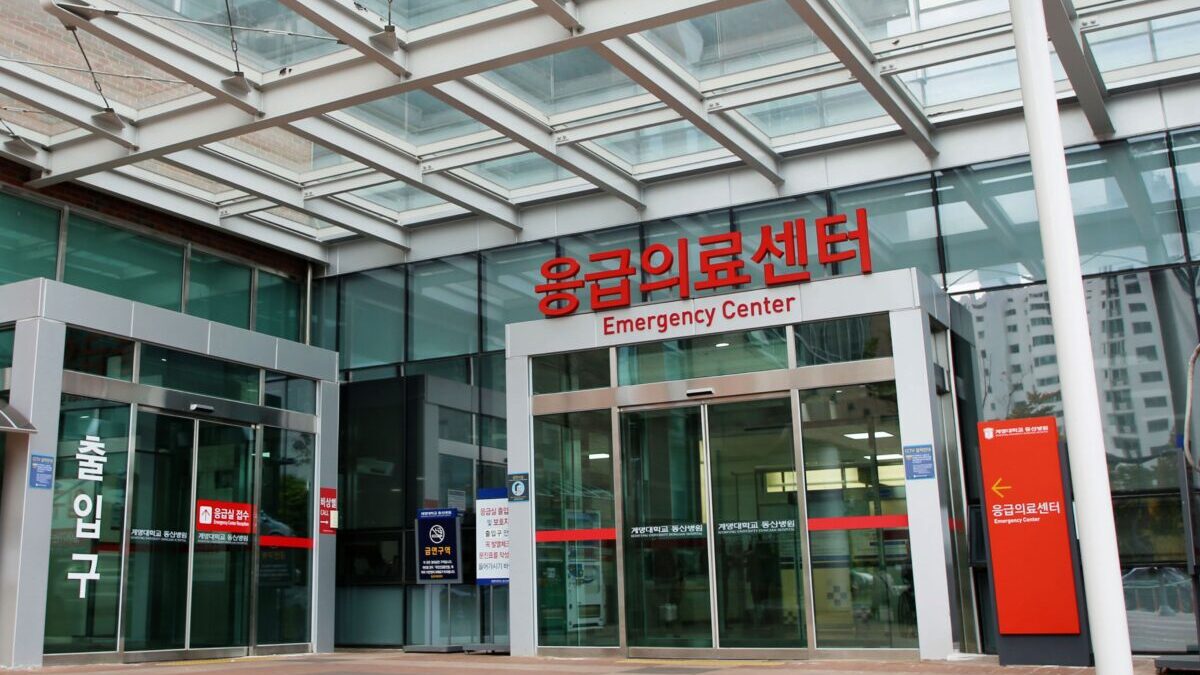
Keimyung University Dongsan Hospital has been officially designated as the new hub for critical emergency care in the Daegu area. The hospital announced that the Ministry of Health and Welfare designated it as Daegu's regional emergency medical center on July 15. With this designation, Dongsan Hospital takes on responsibility for treating critical emergency patients across a population of approximately 1.25 million, covering Daegu’s southwestern districts as well as neighboring areas in North and South Gyeongsang provinces.
The designation is expected to significantly ease emergency care gaps in the region, which have widened as existing regional medical centers consistently run at full capacity. By shortening patient transport times and accelerating treatment, the hospital aims to secure the critical "golden hour" for life-threatening cases.
Top-Tier Specialists and Specialized Emergency Response Systems
Dongsan Hospital met the rigorous requirements for the regional designation thanks to its robust emergency medical infrastructure. Currently, the hospital boasts the largest number of emergency medicine specialists among Daegu’s tertiary general hospitals, with 13 specialists on staff. It operates a 24/7/365 emergency response system supported by 86 specialists across 19 core clinical departments.
To bolster its response to high-difficulty, high-acuity cases, the hospital keeps specialized clinical support teams on constant standby. These include a dedicated cardio-cerebrovascular support team, an ECMO (extracorporeal membrane oxygenation) and extracorporeal circulation team, an interventional procedures team, a wound management team, and an emergency dialysis team. Leveraging these capabilities, Dongsan Hospital played a key role as a "hub emergency medical center" in maintaining local emergency services during the recent nationwide medical vacuum caused by the standoff between the medical community and the government.
Aggressive Infrastructure Expansion and Disaster Preparedness
Ahead of receiving the designation, Dongsan Hospital invested heavily to expand its emergency care facilities. The hospital allocated approximately 5 billion won of its own funds to establish a new 10-bed dedicated Emergency Intensive Care Unit (EICU) and acquire 103 pieces of advanced medical equipment. These updated facilities are scheduled to begin full-scale operations in November this year.
Furthermore, the hospital has fortified its infectious disease response protocols by securing two negative-pressure isolation beds and three general isolation beds. It has also established a Disaster Medical Assistance Team (DMAT) capable of mobilizing within 10 minutes, ensuring a rapid response to large-scale regional disasters.
"Critical emergency care is the very core of essential healthcare, directly linked to saving lives," said Kim Jun-hyung, president of Dongsan Hospital. "As the control tower for emergency medical services in Daegu and North Gyeongsang Province, we will do our utmost to treat critically ill patients and serve as a reliable, last line of defense for our local residents."