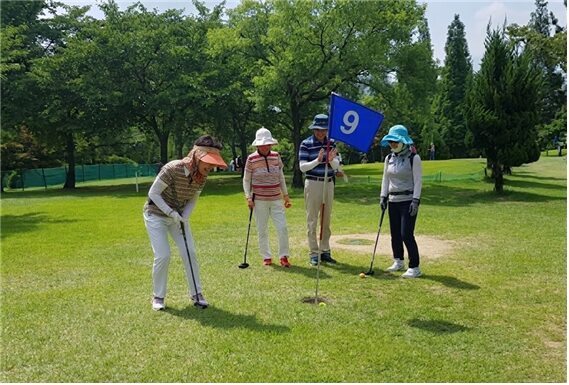
Park golf, a recreational sport rapidly gaining popularity for its seamless fit into modern lifestyles, is an activity that people typically start out of personal interest but ultimately recommend to others for its immense health benefits, a new study has found.
An empirical study of 438 park golf participants mapped out how initial motivations influence overall satisfaction and long-term commitment. The research team was led by Dr. Moon Jeong-nam of Keimyung College University (first author and head of the PR team) and Professor Ha Je-hyun of Keimyung University’s Department of Sports Marketing (corresponding author). Their work offers a detailed look into the internal psychological mechanisms connecting a participant's motives to their ongoing dedication—an area of research that has previously lagged behind the sport's rapid quantitative growth.
Interest Drives Satisfaction, but Health Guarantees Commitment
The findings revealed that "interest"—the core element of pure enjoyment—served as the single strongest factor shaping subjective satisfaction and emotional well-being. This underscores that the immediate fun of park golf is the primary driver behind a participant's day-to-day psychological rewards. Conversely, factors traditionally cited as primary reasons for sports participation, such as external showmanship or technical skill acquisition, carried relatively little weight.
However, the study uncovered a fascinating twist regarding the "health" motive. While working out for health did not directly boost immediate on-field satisfaction, it proved to be a powerful predictor of "behavioral intention," including the likelihood of continuing the sport long-term and recommending it to others.
This suggests that for park golf players, health preservation is viewed less as a source of passing entertainment and more as an "essential task" or an "obligatory driving force" required to maintain their quality of life. In other words, while participants find genuine joy on the green, they pick up their clubs with a strong sense of responsibility, viewing the sport as a vital duty to protect their physical well-being in old age.
Designing a Health-Focused Operations Model
Based on this empirical evidence, the research team proposed new strategies for the sustainable development of the sport. They recommended that local governments and facility operators shift away from purely hardware-focused administrative support—such as simply building more courses—and instead focus on software programs that enhance on-site satisfaction. Furthermore, because health is the core anchor for long-term participation, the team suggested introducing a "health-promotion park golf operations model" that links the sport directly with systematic health-indicator tracking services.
"Beyond simple leisure, park golf functions as a purpose-driven recreational sport aimed at maintaining health and improving the quality of life," the research team noted. "Continued research is necessary to better understand these complex psychological processes in step with the sport's unique characteristics and rapid growth."
The study, titled "The Effects of Park Golf Participants’ Participation Motives on Participation Satisfaction and Behavioral Intention," was published in the May 2026 issue of the Journal of Sport and Dance Science (Vol. 6, No. 2), a KCI-indexed academic journal.