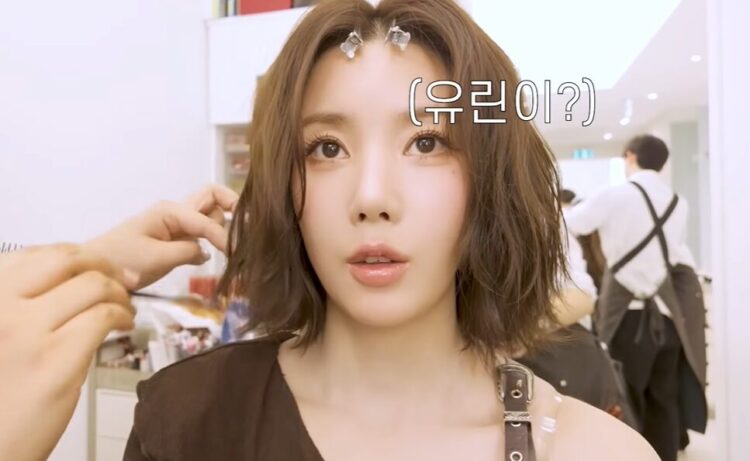
Singer Kwon Eun-bi has recently refreshed her aesthetic, debuting a softer look by lightening her eyebrow tone alongside a hair makeover.
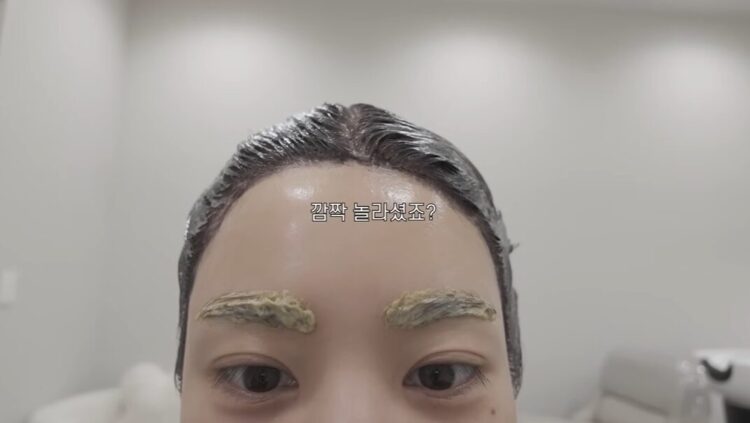
Kwon Eun-bi shared the transformation on her YouTube channel, showcasing how she dyed her hair a lighter shade and adjusted her eyebrows to match the tone. Widely celebrated as the "Waterbomb Goddess," she has traditionally projected a sharp, high-intensity allure with signature black bobs or long, dark, straight hair. This time, however, she unveiled a distinctly different charm with warm brown hair and visibly lightened brows. By softening the frame of her eyes, she exudes a noticeably cleaner, more refined aura.
This technique is a staple among K-pop idols, who frequently recalibrate their brow color to complement their hair transformations. For instance, Park Chae-young (Rosé) has long maintained a signature blonde look, pairing it with lightened eyebrows to project a dreamy, avant-garde aesthetic. Similarly, Kim Tae-yeon (Taeyeon) has previously paired jet-black hair with relatively light eyebrows, allowing her makeup palette to pop and creating a highly sophisticated appearance. Changing just a single facial feature can completely alter a person's overall presentation. Here is a breakdown of why this shift occurs, along with essential guidelines for executing the process safely at home.
When Brows Stand Out Less, Your Overall Impression Softens
Eyebrows are a foundational feature shaping human facial expressions. While dark, sharply defined brows enhance eye definition, they can sometimes project an overly intense or harsh look. To mitigate this, contemporary K-beauty trends frequently utilize techniques that intentionally dial down the visual weight of the eyebrows. Lightening the brows with low-saturation brown or ash tones allows them to blend organically with hair color and harmonize seamlessly with color cosmetics. Reducing the visual dominance of the brows makes the entire makeup application feel lighter and more modern.
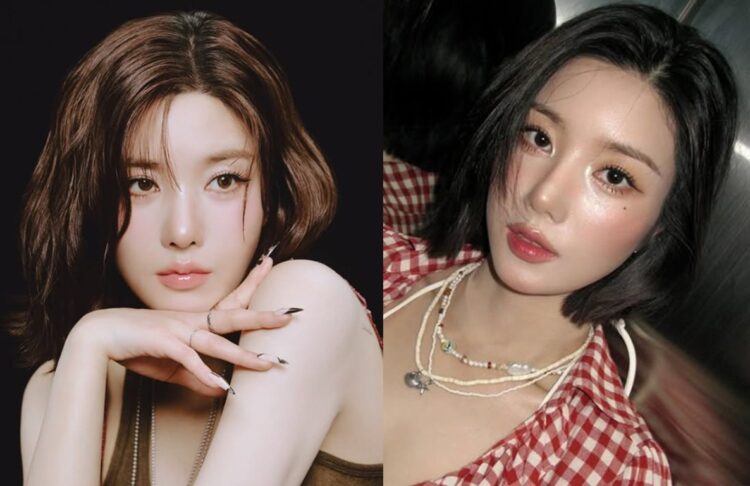
When working with light hair colors, overly dark eyebrows can appear to "float" disconnectedly on the face. To prevent this, beauty enthusiasts typically adjust their brows to be roughly one to two shades lighter than their hair. Conversely, when paired with dark or black hair, subtly lowering the brow intensity can soften a strong countenance and foster a more approachable look. While some individuals calibrate their brow shade to match their irises, others opt for a striking look through full brow bleaching.
However, stripping away brow pigment is not a universal solution. If a shade clashes with an individual's underlying skin tone or hair color, it can leave the face looking washed out or fatigued. Consequently, current idol makeup trends heavily favor eyebrows that are just marginally lighter than their natural shade, rather than fully bleached brows.
Thinking of Dyeing Your Eyebrows at Home?
With an expanding array of specialized, consumer-grade eyebrow dyes entering the market, home brow-toning has become highly accessible. Social media platforms are flooded with tutorial content tracking the steps required to recreate these popular K-pop idol looks.
Caution is mandatory because the periorbital skin surrounding the eyebrows is exceptionally thin and sensitive. Allowing dye to sit on the skin for too long can trigger redness or stinging, while accidental contact with the eyes can cause severe irritation and pain. Prolonged processing times can also fracture the brow hairs or produce an uneven, patchy finish. To avoid these issues, it is imperative to conduct a localized sensitivity test prior to application and barrier the surrounding skin with a multi-balm or similar protective product. Following the chemical process, the eye area should be thoroughly hydrated with a soothing cream.
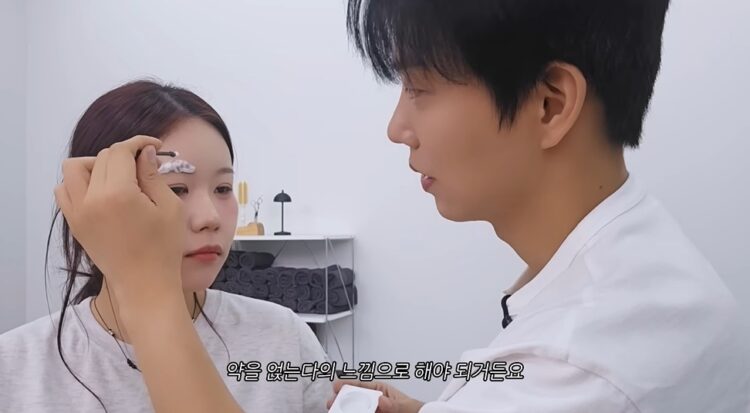
Offering professional insight on the matter, hair designer Lee Seong-gyu (Kiwoo Teacher), who commands a following of 1.6 million YouTube subscribers, advised in a video: "If you apply too sparse a layer, the dye will develop unevenly and turn out patchy. You must apply the product generously, completely burying the brow hairs."
Furthermore, because chemical processing times fluctuate based on individual hair thickness and the desired degree of lift, constant visual monitoring is critical during development. Lee Seong-gyu (Kiwoo Teacher) explained, "After about five minutes, lightly scrape away a small section of the product to gauge the color development. If it remains darker than your target shade—or darker than your eye and hair color—reapply the product over that spot and continue checking it at short intervals."
Don't Just Go Lighter—Match Your Hair and Skin Tone
When attempting eyebrow tinting, aligning the formula with both hair color and skin undertones is critical for a cohesive look. Individuals with light brown or blonde hair achieve the most natural results by keeping their brows within a closely corresponding tonal spectrum. For those sporting black or dark brown hair, achieving a balanced look involves softening the brow tone by just half a shade to one full shade, rather than choosing an overly light tint.
The ideal brow color is also heavily dictated by skin undertones. Generally, complexions with warm or yellow undertones look clean and balanced when paired with ash brown or taupe pigments. Conversely, skin prone to redness or flushing is complemented by softer, neutral brown tones. If the eyebrow color is completely disconnected from the underlying skin tone, it disrupts the balance of the cosmetics and causes the brows to stand out awkwardly.
For novices, it is highly recommended to experiment with temporary color-altering products, such as a brow mascara, before committing to a chemical change. Testing the aesthetic with a washable mascara allows you to determine if a lighter brow tone flatters your features, significantly reducing the likelihood of an unsatisfying result before moving forward with a dedicated dye or seeking professional salon services.