Storing tomatoes in the refrigerator may seem like a logical way to preserve them, but many find the flesh becoming mealy and soft after just a few days. Even if the skin looks intact, the texture and flavor often deteriorate. A tomato’s shelf life depends heavily on temperature and how it is positioned. Here is how to store in-season tomatoes to ensure they stay fresh and flavorful.
Keep the Stem Intact
The most critical rule for tomato storage is to leave the stem on. The stem acts as a natural protective barrier, sealing the fruit against outside air and bacteria. When the stem is removed, moisture escapes through the small point of attachment, and microorganisms can penetrate more easily, significantly speeding up spoilage.
Many people habitually pull off the stems while washing produce immediately after grocery shopping. To maintain freshness, keep the stem attached until the moment you are ready to eat.
Refrigeration: Only for the Fully Ripe
Refrigerating tomatoes regardless of their condition is a common mistake. At low temperatures, a tomato’s cell structure can break down, causing the flesh to become mushy and the flavor to fade.
If underripe tomatoes are placed in the cold, the ripening process stalls, resulting in a bland taste and stunted sweetness. While fully ripe tomatoes can benefit from short-term refrigeration to prevent rot, room temperature is generally superior for maintaining quality. The key is to adjust your storage method based on the ripeness of each individual fruit.
The Upside-Down Rule
When placing tomatoes on a counter or in a container, position them with the stem-side facing down. This reduces air exposure to the stem area, slowing moisture loss and minimizing bacterial entry. This simple adjustment also helps keep internal moisture evenly distributed, delaying the softening process.
Wash Right Before Eating
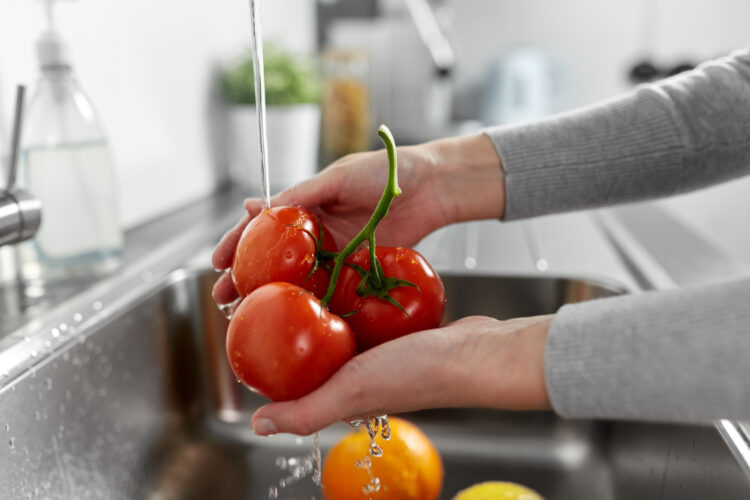
Washing tomatoes before storage is a primary cause of rapid decline. Surface moisture promotes the growth of mold and bacteria, which can affect the integrity of the fruit even before signs of spoilage are visible to the eye. For the best results, keep tomatoes dry during storage and wash them only when you are ready to consume them.
Ethylene Management
Tomatoes release ethylene gas, a ripening agent. When stored near other high-ethylene producers—such as apples or bananas—ripening accelerates, often leading to premature spoilage.
If your tomatoes are already ripe, keep them separated from other fruits. Conversely, if you have green tomatoes that you want to ripen quickly, placing them in a bowl with an apple can help reach that goal. Under normal circumstances, however, isolation is the best way to control the speed of ripening.