The core purpose of routine health screenings is to detect disease early—before symptoms appear. Experts emphasize that the quality of these screenings is determined not by the sheer number of tests performed, but by "diagnostic capability." Even with the same CT or MRI exam, interpretations can vary significantly depending on the radiologist’s experience and subspecialty, highlighting the importance of a center's expertise and internal systems.
Hanaro Medical Foundation operates a health screening system that closely integrates radiology, laboratory medicine, and pathology diagnostics, supported by a team of approximately 90 medical specialists. The foundation explained that it improves accuracy through an integrated diagnostic structure that spans the entire process—from identifying suspicious findings to final analysis and confirmation.
Specialized Interpretation in Radiology
In radiology, the focus is on identifying the presence and characteristics of small lesions through advanced imaging such as CT and MRI. The foundation utilizes an interpretation system that systematically manages and analyzes diverse imaging data. Notably, through the “Hanaro Leaders Teleradiology Reading Center,” it provides remote interpretation for images taken at outside medical institutions, performing more than 1 million outsourced reads annually.

The center is led by Director Lee Jong-du, a specialist in radiology and nuclear medicine. Fourteen professor-level radiologists, including Professor Emeritus Kim Myung-soon of Yonsei University College of Medicine, work full-time alongside a network of 30 interpretation advisory members. This enables subspecialty-based reads—covering the brain, chest, abdomen, musculoskeletal system, and breast—providing medical institutions with rapid and consistent results.
Accuracy in Laboratory Medicine and Pathology
In laboratory medicine, analyses of blood and body fluids complement imaging findings to support a diagnosis. The foundation explained that its strict quality-control standards help accumulate highly reliable data, improving the objectivity of imaging-based diagnoses.
At the pathology stage, tissue biopsies are used to make a final determination of a disease’s nature. In cancer cases, this staging is a critical criterion for treatment decisions. Hanaro Medical Foundation operates a diagnostic system with six in-house pathologists who perform detailed analyses of tissue obtained during the screening process.
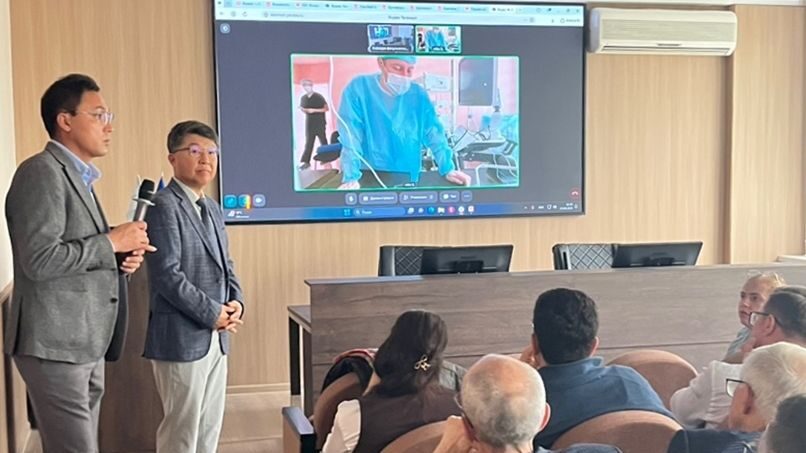
The foundation has also introduced a digital pathology system, allowing high-resolution slide images to be digitized, analyzed, and shared. Through its International Diagnostic Center, it conducts remote consultations with overseas experts. This center is led by Director Kim Han-gyeom, Professor Emeritus at Korea University College of Medicine and a leading authority in pathology.
Data-Driven Quality Control and Specialty Clinics
To improve early-detection outcomes, the foundation recently established a “quality control (QC)” system for endoscopy. It continuously monitors each clinician’s adenoma detection rate (ADR) and manages the accuracy of the examination process using a data-driven approach.
In addition to the screening center, it operates three specialized clinics:
Hormone Health Clinic
Urology Clinic
Women’s Specialty Clinic
Staffed by clinicians with extensive university hospital experience, these clinics offer a level of continuity in medical services that differentiates Hanaro from other screening centers.
“A health screening is not a simple lineup of individual tests, but a comprehensive decision-making process that combines imaging, laboratory testing, and pathology,” said an official from Hanaro Medical Foundation. “The value of the screening is determined by how precisely the results are interpreted. Diagnostic capability is the key factor in establishing trust.”