A micro preemie born after a premature delivery at just 6 months of pregnancy in Korea has safely returned home just before the Lunar New Year.
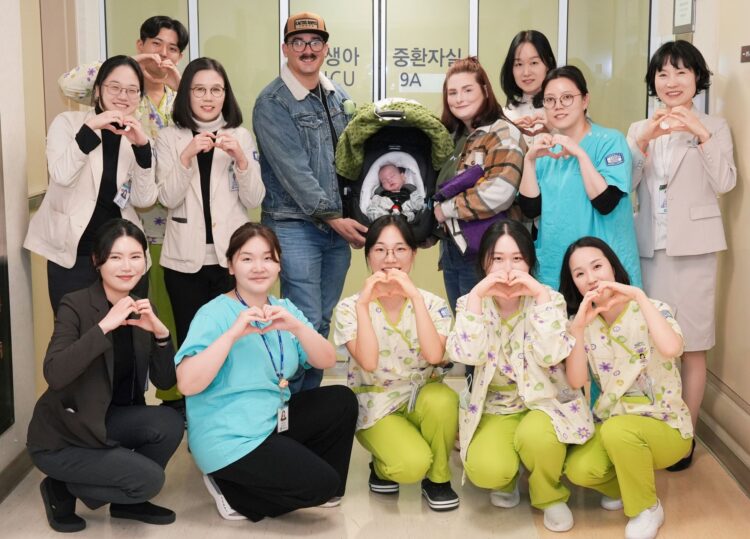
Seoul St. Mary's Hospital announced on the 10th that Stetson, the child of a U.S. military family born as a micro preemie, has recovered his health after intensive care from the medical staff and was recently discharged.
Stetson was in his mother's womb for only 24 weeks and 6 days. The normal pregnancy period is about 40 weeks, and the shorter the gestational age, the lower the survival rate of the baby. It is particularly known that babies born under 24 weeks have a very low survival rate. Stetson was born as a micro preemie, weighing only 688g at birth.
The mother was reportedly transferred urgently from Daegu to Seoul St. Mary's Hospital due to high-risk pregnancy complications. The baby was able to be born through an emergency cesarean section. Professor Kang Byung-soo, who assisted in the delivery, stated, "The mother was in a very critical condition, experiencing seizures and hypertension that could not be controlled by medication, going beyond simple pregnancy-induced hypertension or mild preeclampsia. This was a situation that could have led to cerebral hemorrhage, heart failure, or respiratory failure," conveying the urgency of the surgery at that time.
Immediately after birth, baby Stetson faced several critical challenges, including respiratory distress syndrome, pulmonary hypertension, cerebral hemorrhage, and retinopathy of prematurity. However, thanks to the close collaboration of various specialists, including the neonatal medical staff, pediatric cardiology, pediatric surgery, pediatric radiology, pediatric ophthalmology, and pediatric neurosurgery at Seoul St. Mary's Hospital, he was able to overcome these crises one by one. After intensive care from the medical staff, Stetson's respiratory condition stabilized, and his weight increased to 3.476kg.
Professor Lee Ji-yeon, director of the International Medical Center, stated, "Seoul St. Mary's Hospital's International Medical Center operates a patient transfer hotline system for close cooperation with military hospitals. Thanks to this, we were able to quickly receive high-risk military mothers and successfully treat micro preemies. I deeply appreciate the cooperation of the medical staff within the hospital and will continue to enhance close cooperation and collaboration with military hospitals in the future."