Researchers have developed an intervention model aimed at sharply reducing fall risks among hospitalized older adults in integrated nursing and caregiving service wards—commonly known as “no-guardian wards.”
The clinical trial, which evaluated 70 inpatients aged 65 and older, was published in BMC Geriatrics, an international journal in geriatric medicine. Conducted by the nursing department at Keimyung University Dongsan Hospital in collaboration with the Keimyung University College of Nursing, the project stands out for pairing clinical practice with technology development, earning international recognition for its research execution and originality.
Tackling Fall Risks in No-Guardian Wards
Patient falls remain one of the most persistent safety challenges in inpatient care. In integrated nursing and caregiving service wards, where family guardians do not stay on site, older patients can fall in an instant, leaving staff to manage a constant safety risk.
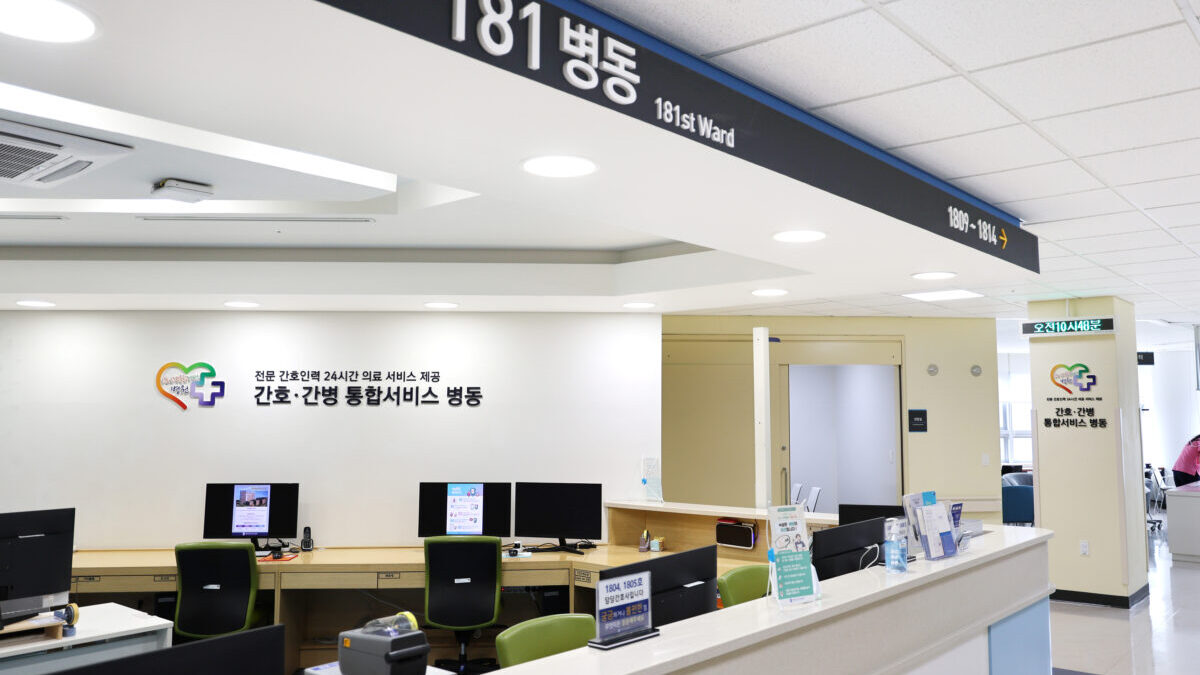
To address this frontline issue, the research team developed the “patient-participation fall-prevention education program (APREAL)” in Ward 181. The program helps hospitalized older patients take an active role in preventing falls, significantly improving their knowledge, confidence, and behavioral follow-through. The team has also filed a patent application for the program to support its potential adoption in medical institutions nationwide.
Frontline Nurse-Led Academic Collaboration
The project was structured as a practice-academia collaboration led by ward nurses who worked alongside nursing faculty to address everyday clinical challenges.
Nurses Kim Eun-ja, Cho Hwa-sook, Kim Yun-kyung, Kim Eun-su, and Park Ji-won from the Dongsan Hospital nursing department carried out the clinical process step by step on the floor. Kim Ga-eun, chair of the Keimyung University College of Nursing, served as the corresponding author, bolstering the study’s academic rigor.
By validating a safety intervention model developed directly on the ward floor, the study reinforces the foundation for evidence-based nursing. It also aligns with Dongsan Hospital’s goal of becoming a research-centered hospital, demonstrating how frontline nurses can identify clinical problems and carry them through to technology development and patent filings.
Building a Culture of Patient Safety
“This achievement is a meaningful outcome created by the synergy between ward nurses’ extensive clinical experience and the nursing college’s research expertise,” said Cho Hwa-sook, deputy director of the nursing department at Keimyung University Dongsan Hospital. “Going forward, we will strengthen support systems through our research committee so that excellent, field-led research can continue, establishing a progressive culture that leads patient safety.”
The nursing department at Keimyung University Dongsan Hospital plans to expand the distribution of the APREAL program to integrated nursing and caregiving service wards across the country, contributing to patient safety and higher-quality nursing care nationwide.