

“Can we save this patient? Should we send them straight to the operating room, or does the intensive care unit come first?”
When a patient arrives at the emergency department bleeding heavily, clinicians must make split-second, life-or-death decisions. To support these critical choices, South Korean researchers have developed a predictive artificial intelligence model by analyzing the records of more than 200,000 patients.
A joint research team led by Professor Lee Jae-myung of the Division of Critical Care Trauma Surgery at Korea University Anam Hospital and Professor Baek Seung-min of the Division of Critical Care Surgery at Ewha Womans University Mokdong Hospital announced on the 7th that they have developed a machine-learning model designed to predict the risk of early death in trauma patients. Rather than standalone software for immediate clinical installation, the development functions as a predictive algorithm that calculates a numerical mortality risk when patient data is inputted.
Trauma from traffic accidents or falls remains a leading cause of death worldwide, particularly among younger populations. In these emergency scenarios, a patient’s condition can deteriorate rapidly. Clinicians must accurately identify high-risk individuals early to intervene effectively and allocate limited resources—such as ICU beds, operating rooms, and blood transfusions.
However, making these judgments is incredibly complex because numerous variables are intertwined: the mechanism of the accident, the location and severity of injuries, the patient's age and baseline health, the pre-hospital emergency care provided, and the clinical course after arrival. Most previous studies in this field relied on small datasets from only one or two hospitals, making it difficult to verify whether their predictive models would remain accurate across different institutions or time periods. Furthermore, many existing AI systems operated as "black boxes," leaving clinicians unable to see the underlying logic behind a prediction.
A Predictive Model Built from 207,012 Patient Records
To address these limitations, the research team analyzed 207,012 cases from a nationwide dataset of 237,616 severe trauma records collected by the Korea Disease Control and Prevention Agency (KDCA) between 2016 and 2020, excluding entries with missing or inconsistent data. The predictive model was trained using data from 2016 to 2018 and subsequently tested against real-world data from 2019 to 2020. This allowed the team to validate whether the algorithm could accurately evaluate new, unseen patients.
The researchers evaluated six machine-learning methods side by side: logistic regression, k-nearest neighbors (k-NN), decision tree, random forest, multilayer perceptron (MLP), and XGB.
Among these, the XGB model demonstrated the highest performance. On two primary evaluation metrics measuring a model's ability to distinguish high-risk patients from others, the XGB model scored 0.985 and 0.957, respectively. In medical AI evaluation, scores closer to 1 indicate higher accuracy, and results above 0.98 are considered exceptionally strong. The second-best model, random forest, demonstrated similar robustness with scores of 0.984 and 0.956.
Notably, even when tested against data from 2020—a year when the COVID-19 pandemic severely disrupted the broader emergency medical infrastructure—the XGB model maintained an accuracy score of 0.984. This stability suggests the algorithm can reliably perform its role regardless of chaotic conditions affecting the hospital system.
Identifying the Key Risk Factors
The research team also investigated the specific clinical variables the model relied on to calculate risk. Utilizing an analytical technique known as SHAP (SHapley Additive exPlanations), they traced how much each individual piece of information influenced the AI's final output.
The analysis revealed that pre-hospital cardiac arrest status, the Injury Severity Score (ISS), age, and the time elapsed before the first blood transfusion were the most critical factors driving the mortality risk predictions. Crucially, these factors align directly with the primary clinical indicators emergency physicians check first when a trauma patient arrives.
The model’s capacity to explain why it flagged a patient as high-risk is a major milestone. Clinicians must understand the clinical reasoning behind an AI's judgment before they can confidently incorporate it into active treatment plans.
By leveraging nationwide public data, the study successfully demonstrated high predictive accuracy alongside interpretability, scalability across different hospital environments, and generalizability over changing time periods. While the algorithm represents a breakthrough, the researchers noted that the findings reflect a retrospective validation phase, meaning further clinical trials will be necessary before the tool is deployed in live hospital settings.
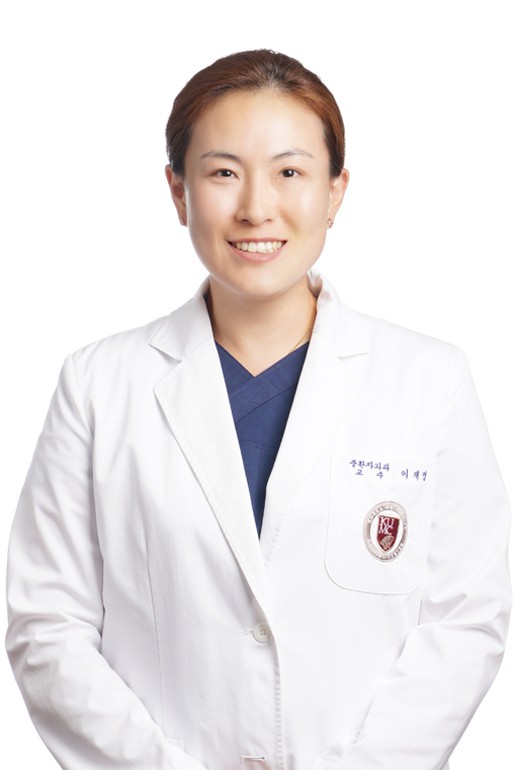
"We expect this will serve as foundational data that can be used in the future to rapidly triage patient risk within both the emergency medical system and trauma care environments," said Professor Lee Jae-myung.
Professor Baek Seung-min added, "By utilizing a nationwide trauma registry, we confirmed the viability of screening early mortality risk at a systemic level. Moving forward, we plan to refine the model, conduct prospective validation, and advance this research to seamlessly integrate AI-based risk triage into our emergency and trauma networks."
In an emergency room, a decision made in seconds dictates the line between life and death. While this predictive model will not be adopted overnight across every hospital, its ongoing validation and integration into clinical practice promise a future where fewer clinicians have to utter the words, "If only we had known a little sooner."
The study was published in the prestigious international journal World Journal of Emergency Surgery, a Q1-ranked title positioning it within the top 2.6% (average JIF percentile 97.4) of journals in the fields of surgery and emergency medicine.