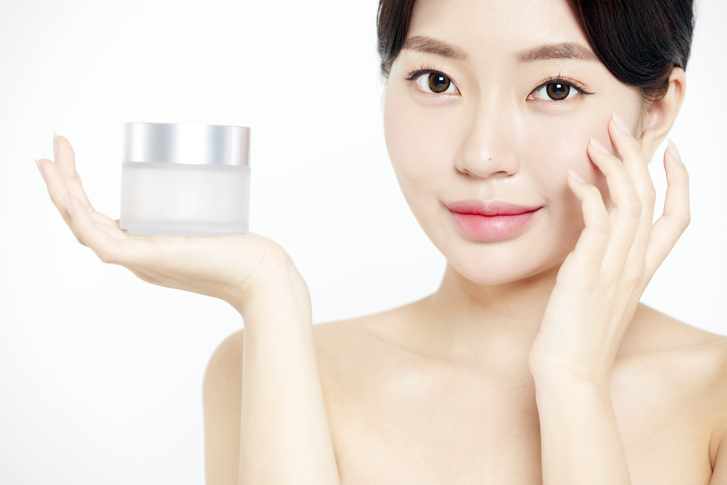
Will applying moisturizer in the morning keep your skin hydrated all day? The cream you apply at the start of your day can actually begin wearing off around lunchtime, and reapplying far more frequently may be the key to keeping skin moisture consistently elevated.
A research team led by Professor Kawaiola Kael Aoki at Nova Southeastern University in the United States analyzed the longevity of four commercially available moisturizers. According to their paper published in a recent issue of the international journal Skin, the hydrating effects of most standard over-the-counter products drop off significantly within just three to five hours.
To track changes in skin hydration, the researchers applied four widely used products—SkinMedica HA5 Serum, Cetaphil Moisturizing Cream, Eucerin Advanced Repair Cream, and CeraVe Moisturizing Cream—to the forearms of 30 healthy adults. Skin moisture was measured before application and then at one hour, four hours, and 24 hours afterward. The team then utilized a statistical model to calculate exactly when each product's moisturizing effect faded back to the level of untreated skin.
The analysis revealed that the product that maintained its hydrating effects the longest was SkinMedica HA5 Serum, which continuously increased skin moisture for approximately five hours. In contrast, the moisturizing benefits of both Cetaphil and Eucerin declined within 3.5 hours, indicating that these formulas require more frequent applications to sustain skin hydration.
Interestingly, untreated skin initially showed a decrease in moisture before gradually recovering over time. The research team attributed this pattern to natural physiological fluctuations in skin hydration driven by factors such as sweating, blood flow variations, and the surrounding environment. Meanwhile, CeraVe Moisturizing Cream demonstrated a pattern of moisture change highly similar to untreated skin, suggesting that the formula may function by stabilizing and protecting the skin barrier over time rather than providing an immediate, substantial boost to skin moisture.
"The moisture-boosting effects of moisturizers are not sustained, and their duration varies widely depending on the formulation," the researchers noted. "For readily available moisturizers sold on the market, reapplication every three to four hours is necessary to keep skin moisture above baseline levels."
The team added that the conventional skincare habit of applying moisturizer just twice a day—once in the morning and once at night—is likely falling short of maintaining adequate skin hydration during the dry afternoon hours.