

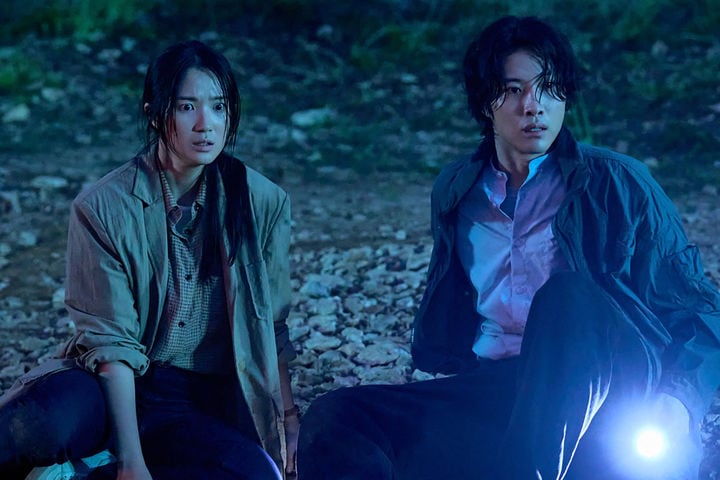
With the box-office success of the film Salmokji, Yesan in South Chungcheong Province is emerging as a premier screen-tourism destination, drawing crowds to its various filming locations. Starring Kim Hye-yoon and Lee Jong-won, Salmokji is a horror film that follows the strange events experienced by a road-view filming crew at the Salmokji reservoir. It recently surpassed 3 million total admissions and continues its surge, ranking as the second highest-grossing Korean horror film of all time.
Riding this wave of popularity, the real-life Salmokji has risen as a “holy site” for horror fans. As travelers arrive to experience the setting firsthand and seek out the movie's signature tension, the once-quiet rural reservoir has unexpectedly become a major hotspot. In particular, crowds have flocked there at night for courage tests, to the point that it earned the nickname “Sallidan-gil.”
Online, the reaction has been playful, with commenters noting, “So many people went that the ghost got exorcised,” and “Even the ghost will be sightseeing.” This amusing commotion sparked by a horror movie has made Yesan even more intriguing. For those who follow that curiosity to Salmokji, here are several Yesan travel courses thaname may conjure a chilly vibe, but in fact, the name comes from the spindle tree (Euonymus) that offer a perfect complement to the cinematic thrill.
Thought It Was a Ghost Hotspot, but It’s a Stork Habitat
Known as the setting of a horror film, Salmokji stirs a peculiar imagination. Just hearing the t once grew wild nearby—the place name itself carries no spooky meaning. Especially during the day, far from the mysterious ghost stories or the dark scenes of the film, it feels more like a tranquil ecological sanctuary where storks take flight over a wide reservoir.
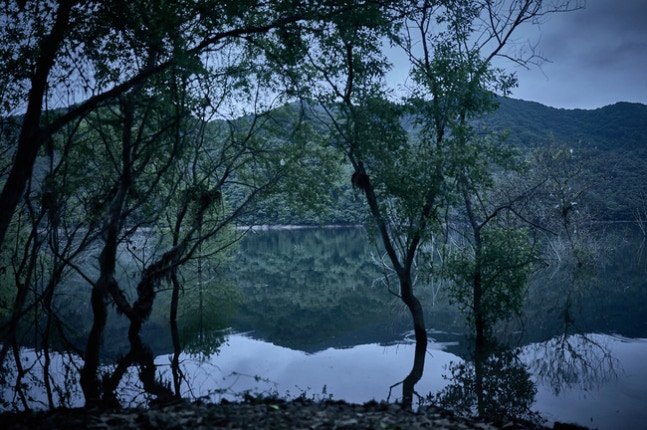
If you visit because of the movie, it is best to shift your focus from ghost-hunting to an ecological walk. As visitors began arriving late at night and safety concerns surfaced, access to the area is currently restricted from 6 p.m. to 6 a.m. the following day. The narrow access roads and dark surroundings increase the risk of accidents at night.
However, a daytime visit to Salmokji is far from disappointing. As you walk through the quiet landscape where the peaceful reservoir meets a protected stork habitat, chilling scenes from the movie may come to mind, yet the breeze and the scent of grass naturally bring a sense of healing.
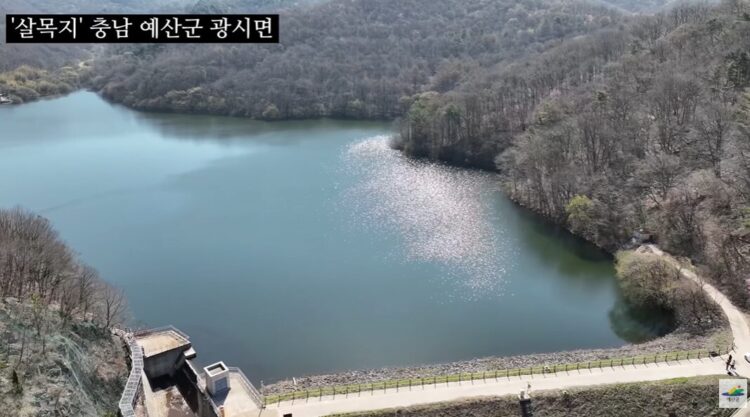
The national ecological exploration trail, newly unveiled this spring, is also worth checking out. Starting from the Yesan Stork Park and connecting Bogangji and Salmokji, the wooden deck path includes an observation deck, photo zones, and a stork-viewing platform. It is an ideal spot for photography with the reservoir as a backdrop, and lucky visitors may even see storks strolling along the water’s edge or taking flight. Even if you arrive expecting a haunted hotspot, the quiet scenery along the stork trail invites you to pause and rest.
Sweet Apple Desserts at Yesan Market
After exploring the stork trail, Yesan Market is the ideal next stop for hungry travelers. The market has become a signature part of any Yesan itinerary, combining the charm of an old traditional market with youth startup spaces and a diverse menu using local specialties. With options ranging from gukbap (rice soup) and noodles to meat dishes and apple desserts, it is easy to find something for every palate.

Recently, Choi Yoo-jung—formerly of the girl group I.O.I—drew attention by visiting Yesan Market on her YouTube channel. In the video, she and her companions tried pies and tarts made with Yesan apples, one of the region's signature products. They vividly described the treats, noting they were "packed with warm apples" and featured a "crispy crust with a chewy, moist center."
These apple desserts offer more than just sweetness. The dietary fiber in the fruit helps support digestion, and pectin can contribute to a feeling of fullness. Furthermore, the malic and citric acids that give apples their tangy flavor can stimulate the appetite and help ease the fatigue that builds up during a day of travel.

It is also worth exploring the alleys near the market. With older shops standing alongside newly opened stores, the area feels both familiar and fresh. Amid the market’s distinctive energy, the local everyday life and atmosphere of Yesan naturally shine through.
A Humanities Walk at Chusa's House
To wrap up the trip, visitors can continue to Chusa’s House and the Chusa Memorial Museum, both known for their serene atmosphere. Chusa’s House is where you can encounter traces of Kim Jeong-hee (Chusa), a late-Joseon calligrapher and Silhak (Practical Learning) scholar. It is an ideal course for a "humanities walk," allowing visitors to linger in a quiet, thoughtful mood.
As you step into the old house, the low walls, spacious courtyard, and neatly connected hanok layout immediately catch the eye. Touring the house while following the stillness it holds reveals another layer of the history Yesan contains. Nearby, the memorial museum and walking paths are connected, allowing the route to flow naturally from the hanok ambiance into formal exhibition spaces.
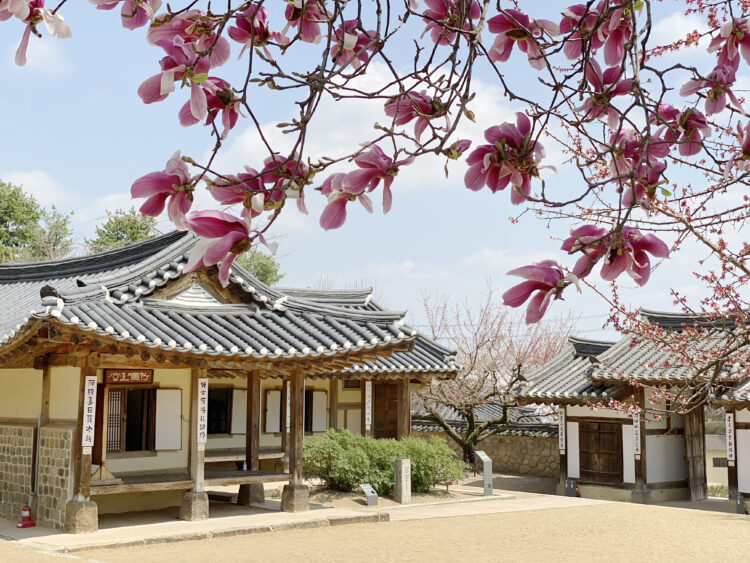
At the Chusa Memorial Museum, visitors can take a closer look at Kim Jeong-hee’s life, calligraphy, and scholarly world. Exploring how his distinctive style of script—known as “Chusa-che”—was formed adds depth to the journey.
An unexpected curiosity that begins at Salmokji leads travelers into Yesan’s ecology, flavors, and history, completing a richly varied itinerary. The more you visit in the daytime, the more layers you encounter—Yesan follows the traveler’s gaze to create a story that goes far beyond the screen.