Actress Song Ji-hyo (44) received her first health check-up.
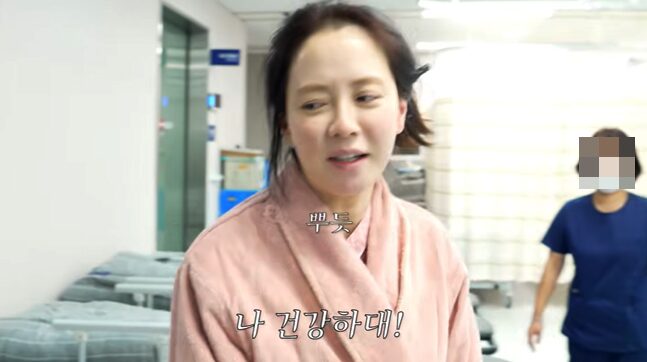
On the 26th, Song Ji-hyo uploaded a video titled 'Shocking Results of Song Ji-hyo's First Health Check-up' on her YouTube channel. It literally captured her undergoing her first health check-up in her life.
Looking haggard, Song Ji-hyo arrived at a health check-up center in Mapo-gu, Seoul, saying, "This is my first health check-up since I was born. I couldn't sleep a wink. (Because of the colonoscopy prep) last night was really hell," and added, "Taking the medication was so hard. I didn't know the tricks, so I started my diet a week ago and now I feel weak."
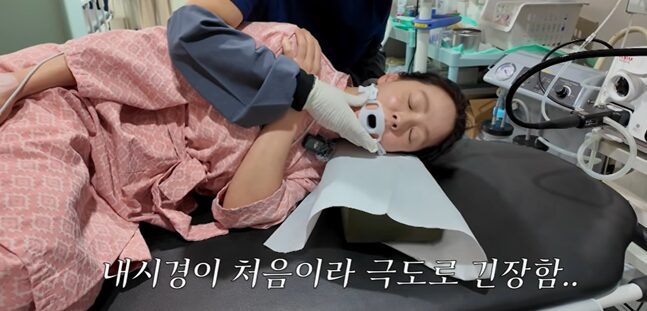
After basic tests like vision, weight, and blood pressure, Song Ji-hyo underwent a sleep-induced endoscopy for her stomach and colon. She had previously revealed on her YouTube channel that she drinks alcohol five times a week, which raised concerns, but fortunately, her liver was clean, and only mild gastritis was found during the stomach endoscopy. However, a polyp about 5mm in size was discovered in her colon and was removed. The specialist explained, "It's not large. The shape is not bad, but it can still be a cancer-causing factor, so we removed it."
Contrary to her worries, Song Ji-hyo left the hospital feeling refreshed, stating, "I think the results came out better than my lifestyle habits, so I feel very good. I will pay more attention to my health from now on. I hope you all take care of your health too."
While interest in health is high, many people still postpone health check-ups. Previously, actor Jin Tae-hyun discovered thyroid cancer during his first health check-up in 44 years, which he received at the urging of his wife Park Si-eun, and fortunately underwent surgery and recovered his health. When is it good to start getting health check-ups?
Starting Age for Health Check-ups
General health check-ups can be received every two years starting from age 20, and screenings like stomach and colon endoscopies are recommended starting at age 40.
National Health Insurance subscribers (non-office workers among employees receive them annually) can receive general health check-ups every two years starting from age 20. They are categorized by even and odd birth years. There are school check-ups during adolescence (when entering elementary, middle, and high school), but comprehensive check-ups for adults typically start at age 20.
General health check-ups are provided free of charge for eligible individuals, while additional comprehensive tests are paid. The basic free test items include ▲Physical measurements: height, weight, waist circumference, BMI, blood pressure ▲Blood tests: anemia (hemoglobin), diabetes (fasting blood sugar), dyslipidemia (cholesterol, triglycerides), liver function (AST, ALT, GGT) ▲Urine tests: proteinuria, hematuria ▲Others: vision, hearing, chest X-ray (pulmonary tuberculosis), oral examination, etc.
Stomach Cancer & Colon Cancer... At What Age Should Cancer Screenings Start?
The National Cancer Screening Program operated by the Ministry of Health and Welfare and the National Health Insurance Corporation provides low-cost screenings to support the early detection of six major cancers, including stomach and colon cancer. Eligible individuals can receive screenings annually or every two years. It is designed to reduce cancer mortality rates, and the out-of-pocket cost is less than 10% (some are free), making it economically manageable. High-risk groups (family history, smoking, etc.) should get screened earlier.
According to national cancer screening guidelines, individuals aged 40 and over can receive stomach endoscopies (or barium studies) every two years. The recent recommendations from the National Cancer Center (2025 revision) emphasize a two-year cycle for ages 40-74, and if there is a family history, early screening is recommended before age 40. The cycle may be shortened in cases of gastritis or Helicobacter pylori infection.
For colon cancer, individuals aged 50 and over can receive fecal occult blood tests (with endoscopy if positive) annually, but recent guidelines recommend starting colonoscopy at age 45 every ten years. If results are normal, follow-up tests are done every 5-10 years, and if polyps are found, the frequency of testing depends on the size, number, and histological type (adenomatous or not). If there is a family history, screening should start at ages 40-45.
For liver cancer, high-risk individuals (B and C hepatitis, liver cirrhosis) aged 40 and over can receive liver ultrasounds and serum tests every six months, while women aged 40 and over can have mammograms every two years for breast cancer. Women aged 20 and over can receive Pap smears every two years for cervical cancer, and high-risk individuals aged 54-74 (30 pack-years of smoking: 3 packs daily for 10 years) can receive low-dose chest CT scans every two years for lung cancer. Smoking history is assessed through health check-up questionnaires or smoking cessation treatment records, which are essential for early detection.
Check eligibility on the National Health Insurance Corporation app or website and make an appointment at a designated hospital. If abnormalities are found after the check-up, free or low-cost follow-up tests are provided. For example, if a fecal occult blood test for colon cancer is positive, a colonoscopy, or if abnormalities are found during a stomach endoscopy, a biopsy can be performed without out-of-pocket costs (or less than 10%). Regular health check-ups alone can greatly help in preventing and early detecting cancer.