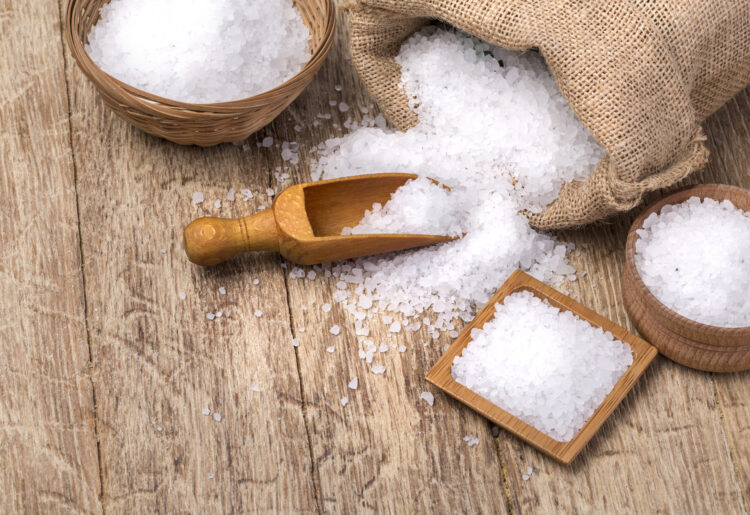
Salt is the most fundamental seasoning in any kitchen, yet its components and uses vary significantly depending on the variety. From basic sea salt and refined salt to specialty options like bamboo and Himalayan pink salt, the price gap can be staggering. However, despite marketing claims of "healthier" alternatives, the sodium content across these types remains remarkably consistent. Relying solely on the presence of trace minerals may lead consumers to overlook the most critical health factor: total daily intake.
Understanding the Basics: Refined, Sea, and Flower Salt
The primary difference between salts lies in their processing methods rather than their nutritional impact on blood pressure or kidney health.
Refined Salt: Produced by refining seawater to a sodium chloride ($NaCl$) purity of approximately 99%. It is inexpensive, free of impurities, and has uniform granules, but essential minerals like magnesium and potassium are almost entirely removed during processing.
Sea Salt: Created through the natural evaporation of seawater. While it retains small amounts of potassium and magnesium, these levels are too minute to offer significant health advantages. Its high moisture content can also make storage a challenge.
Flower Salt (Re-refined Salt): This is sea salt that has been dissolved and recrystallized. It features fine granules and a clean taste due to the removal of impurities, making it a staple for general home cooking.
The Appeal of Premium Varieties: Bamboo and Pink Salt
Specialty salts are often prized more for their unique culinary properties than for their clinical health benefits.
Bamboo Salt is created by roasting salt inside bamboo cylinders multiple times at extreme temperatures. This process imparts a unique sulfurous aroma and a subtle sweetness that enhances high-end Korean cuisine. While some proponents claim antioxidant effects, the sodium concentration remains virtually unchanged, despite a price tag several times higher than table salt.
Himalayan Pink Salt derives its characteristic hue from trace minerals like iron. While it offers a unique texture and a milder salty profile—ideal as a finishing salt for steaks—its sodium ratio is almost identical to that of regular salt.
The Universal Constant: 400mg of Sodium per Gram
Regardless of the origin or price, 1g of salt contains an average of approximately 390mg to 400mg of sodium. The World Health Organization (WHO) recommends that adults consume less than 5g of salt per day (equivalent to less than 2g of sodium). Exceeding this limit increases the risk of hypertension and cardiovascular disease, regardless of whether the salt is "refined" or "natural."
The most effective health strategy is not finding a "better" salt, but rather reducing overall usage. Managing sodium in processed foods and limiting the consumption of salty broths are more practical approaches than switching to expensive varieties.
Critical Checks When Buying Salt
When selecting salt, consumers should prioritize the nutritional label over advertising slogans:
Verify Sodium Content: Confirm the actual sodium levels per serving and look for legitimate low-sodium alternatives if necessary.
Check for Additives: Some refined salts include anti-caking agents to prevent clumping.
Match Granule Size to Use: Coarse salts are best for pickling, while fine-grain salts are more appropriate for seasoning soups and stews.
Ultimately, the key to health management is not which product you buy, but how little you use. Monitoring total intake remains the true starting point for maintaining long-term wellness.