

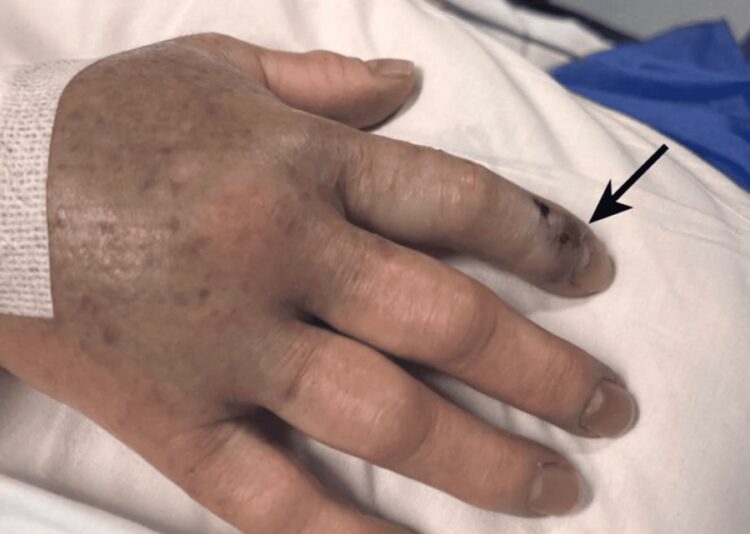
A case has been reported of a 50-year-old woman whose hand and arm swelled and nearly reached a state of necrosis after being bitten by a viper.
This case was disclosed in a paper by the Duru-Bouga Regional General Hospital Center in Portugal on the 23rd. A 57-year-old woman visited the emergency room after being bitten by a viper. The woman experienced nausea and vomiting, and her blood pressure had dropped to 34mmHg.
She developed a hemorrhagic blister on her right index finger from the viper's fangs, and her entire hand was swollen. The swelling then spread not only to her hand but also to her forearm and shoulder. Medical staff explained, "The area bitten by the viper showed discoloration and initial necrotic changes."
The rapid progression of swelling from the hand to the forearm is a typical pattern caused by the protein-degrading enzymes and inflammatory mediators present in viper venom. Medical staff stated, "Hypotension is also a well-known symptom caused by viper venom."
The medical team administered antivenom to the woman and transferred her to the intensive care unit. Although various test results improved, the swelling in her limbs worsened, necessitating another dose of antivenom. Due to persistent fever raising concerns about secondary infection, antibiotic treatment was added, and supportive treatments such as limb elevation (keeping the swollen arms and legs elevated above the heart) were implemented.
As a result, fortunately, the woman's fever subsided, and her inflammation levels decreased, gradually returning to normal. On the 10th day of hospitalization, she was transferred to a home care ward and received antibiotic treatment for 14 days, ultimately being declared cured.
Medical staff cautioned, "While viper bites are rare, they can lead to life-threatening complications if systemic toxicity occurs, so caution is advised."
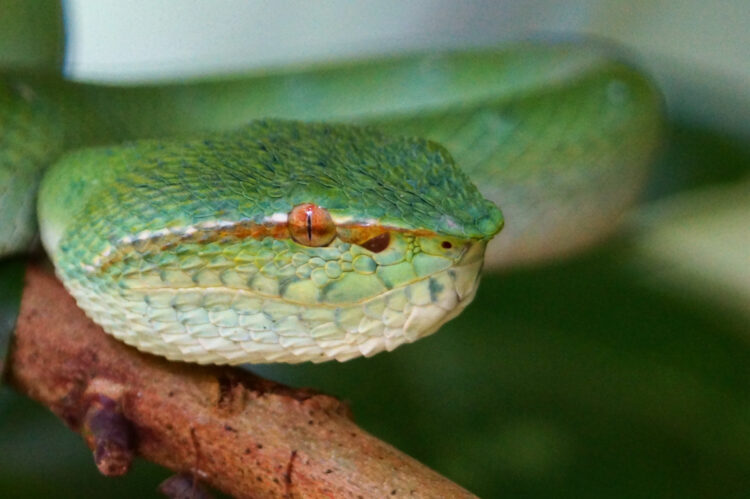
Are there many vipers in Korea? According to global statistics, Korea is relatively safe from vipers. There are only three species of vipers in Korea: the Korean viper, the black viper, and the small viper. They possess little to no lethal neurotoxins that cause paralysis or respiratory failure, only causing bleeding, tissue necrosis, and blood coagulation abnormalities. Therefore, the mortality rate from viper bites is very low. However, severe swelling and the possibility of necrosis exist, and recovery can take a long time.
The most distinctive feature of a viper is its head shape. The head is triangular, wide, and flat. Unlike other snakes, there is a clear distinction between the neck and head. While the eyes of regular snakes are round, vipers have vertically elongated oval-shaped cat-like eyes.
If bitten by a viper, it is best to minimize movement. The more the muscles move, the faster the venom spreads throughout the body. People nearby should not let the patient walk and should move them using a stretcher or vehicle as much as possible. If nothing is available, carry the patient.
It is also important to keep the bite area lower than the heart and to remove tight items such as rings, watches, and shoes. As the venom spreads, swelling progresses rapidly, and constricting items can block blood flow, increasing the risk of necrosis or amputation. Avoid tying with a tourniquet or string, or attempting to suck out the venom with the mouth. This can completely block blood flow and cause tissue necrosis, and when the constriction is released, the venom can spread throughout the body all at once. Sucking out the venom with the mouth poses a risk of poisoning the rescuer. It is essential to transport the patient to the hospital as quickly as possible.