"It is okay to eat red meat and full-fat dairy products for healthy fat intake. Increase your protein intake more than now, and consume natural ingredient foods instead of ultra-processed foods."
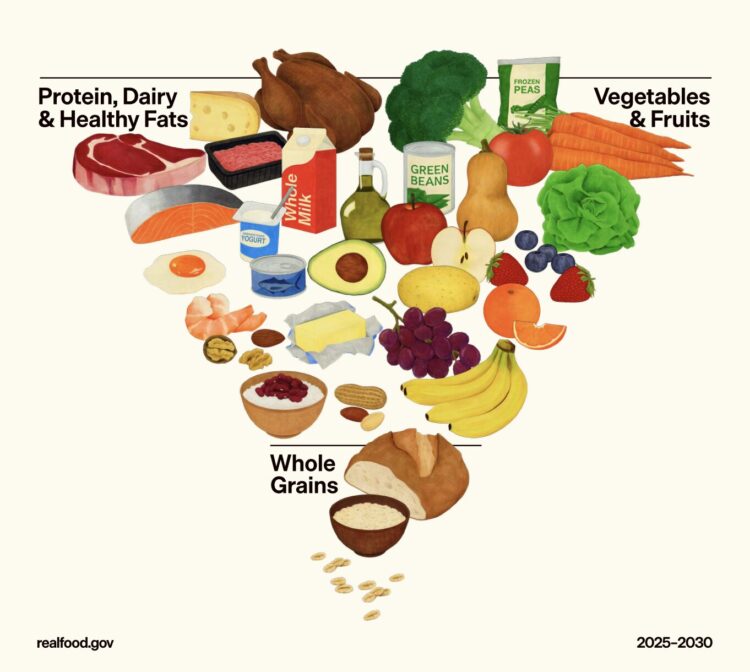
The Trump administration in the U.S. announced a new dietary guideline (DGA) on the 7th (local time), which includes the above content, declaring a major shift in nutritional policy. Immediately following the announcement, there was a backlash from various sectors including academia, healthcare, and politics in the U.S. This revision directly contradicts the recommendations that have been in place for over 40 years, which focused on low-fat and plant-based fat food consumption.
The guideline recommending "consumption of natural ingredient foods instead of ultra-processed foods" was something everyone agreed on. However, opinions were divided on other contents. In particular, the recommendation for "consumption of red meat and dairy products" raised concerns about saturated fat intake and led to suspicions that "the U.S. government was swayed by dairy and livestock industry lobbying."
Professor Park Yong-woo, a leading expert in obesity treatment and nutrition at Gangbuk Samsung Hospital, also evaluated that "the U.S. guideline is clearly radical considering the previous stance." However, he also stated, "Despite various controversies, it is a result that has changed in a desirable direction from a health perspective."
What is the reason for the DGA revision being at the center of such heated controversy? Is it okay to apply the new dietary guidelines to the food on my table? Comedy.com introduces related content in three parts based on an interview with Professor Park Yong-woo.
〈Upper〉 Declaration of End to War on Saturated Fats, Why?
〈Middle〉 Is it okay to increase protein intake?
〈Lower〉 Return to 'Real Food' Based on Natural Ingredients

DGA (Dietary Guidelines for Americans). It is the official national dietary guideline published by the U.S. government every five years since 1980 for the health of its citizens. The guidelines announced earlier this month by Secretary of Health and Human Services Robert F. Kennedy Jr. and Secretary of Agriculture Brooke Rollins are the "Dietary Guidelines for Americans 2025-2030," marking the 10th revision.
The DGA is a document that serves as a standard when determining food distributed in schools, military, hospitals, and nutrition supply policies for low-income populations in the U.S. In other words, it has a significant impact that goes beyond simple recommendations and can influence the diets and food systems of Americans.
However, the standards have changed dramatically in this revision. In particular, unlike previous guidelines that emphasized "fats as the enemy of health," the new guidelines introduce the concept of "healthy fats" and recommend animal fat foods such as meat, butter, and tallow. It also mentioned that it is okay to consume whole milk instead of the previous recommendation to drink skim or low-fat milk.
In response, the American Heart Association (AHA) strongly opposed, stating, "Saturated fat intake raises LDL (bad cholesterol) levels and is a cause of cardiovascular disease," and that "recommending red meat or dairy products containing saturated fat is dangerous."
Plant Oils May Be More Dangerous Than Butter or Tallow
Excessive saturated fat intake can indeed cause health problems. Perhaps aware of the backlash, the U.S. government limited the daily saturated fat intake to within 10% of total caloric intake in this revision.
Nonetheless, isn't animal fat found in meat or dairy products more dangerous than plant fats? Shouldn't we avoid recommending foods like butter or tallow?
In response, Professor Park Yong-woo stated, "Butter or tallow is usually used in small amounts during cooking, and people don't typically eat large quantities with a spoon. While previous guidelines recommended plant oils instead of butter or lard, in fact, plant oils can be more dangerous."
Why might refined seed oils like canola oil, grape seed oil, corn oil, and sunflower oil be more dangerous than butter or tallow? Professor Park explained, "Plant oils have a high smoke point, but they can oxidize when heat is applied before reaching that point," and added, "This process can produce harmful substances like peroxides."
Plant oils become more dangerous the longer they are used or the more they are heated, and frequent consumption can increase oxidative stress in the body. However, olive oil, which is rich in omega-9 and resistant to oxidation, is relatively safe. The new dietary guideline revision also recommends the use of olive oil along with butter and tallow.
When Did Fats Become the 'Enemy of Health'?
Why has the U.S. government continued its hostile policy toward saturated fats? What was the reason for opposing fat intake itself?
The misunderstanding about fats dates back to the 1977 report (McGovern Report) published by U.S. Senator George McGovern. The main content of this report was, "Reduce fat intake and increase carbohydrates." The research results of American physiologist Ancel Keys, which popularized the relationship between saturated fats, cholesterol, and heart disease, became the main basis.
The problem is that Ancel Keys perpetrated a fraud. To claim that "countries with high fat intake have a higher incidence of heart disease," he selectively published research results based only on 7 out of 22 countries that fit his hypothesis.
Professor Park analyzed, "The country that had the strongest correlation with Ancel Keys' hypothesis was the U.S.," and stated, "The fraud he committed became the seed of misfortune that defined fats as the enemy of health."
Ancel Keys' research significantly influenced the direction of the U.S. dietary guidelines (DGA) that began to be published from 1980. Since then, national guidelines have been announced based on the reports of the Dietary Guidelines Advisory Committee (DGAC) every five years, and for a while, guidelines recommending low-fat diets continued.

The Problem Was Sugar and Ultra-Processed Foods, Not Fats
"Interestingly, since the announcement of the DGA in 1980, the obesity population in the U.S. has actually increased sharply."
Professor Park stated that the reason for the increase in obesity in the U.S. was not due to fat intake. Rather, he pointed out that "the impact of sugar and ultra-processed food intake was significant."
After the announcement of Ancel Keys' research, as fats were demonized, the sugar industry in the U.S. actively supported doctors who defined fats as the 'enemy of health' and began funding related research. This was known as the "sugar scandal." In this atmosphere, the DGA in the 1980s used vague expressions like "avoid too much sugar." This was definitely different in tone from the specific limits on sugar intake in the 2025-2030 DGA revision. Later, in the 1990s, the DGA also specified that "sugar intake should be moderate."
Professor Park stated, "Of course, the 2025-2030 DGA also cannot escape the suspicion of lobbying." In fact, looking at the reviewers of this revision, it is evident that people from academia are almost excluded, and many individuals related to the dairy and livestock industries are included. Nevertheless, Professor Park believes that "regardless of political and economic interests, this guideline, which encourages eating 'real food' like meat or milk, is more beneficial from a health perspective than the past DGA, which subtly recommended sugar or processed foods due to lobbying from companies like Coca-Cola or Kellogg."
Daily Saturated Fat Intake Limit, Equivalent to One Serving of Pork Belly in Korea
The World Health Organization (WHO) recommends that saturated fat intake be limited to within 10% of total caloric intake. The Korean Ministry of Health and Welfare recommends less than 7% of total energy intake. For example, if one consumes 2000 kcal a day, it is appropriate to consume less than about 15g of saturated fat. Meanwhile, the American Heart Association (AHA) strictly limits it to less than 5-6% if there is a risk of cardiovascular disease.
According to domestic and international recommended standards, an adult consuming 2000 kcal a day should have a saturated fat intake limit of about 15-22g (7-10%). However, adhering to this standard is not as easy as it seems. Just eating one serving of pork belly (200g) can lead to an intake of about 20g of saturated fat.
So, should we avoid eating pork belly altogether? Professor Park states, "If you are healthy, you can eat it when you want." Of course, it is dangerous for those with diabetes who have impaired glucose control and already have inflammation in their blood vessels. Such high-risk patients, as well as the general public, have an increased likelihood of developing fatty liver or cardiovascular diseases if they consume saturated fats for a long time.
However, for healthy individuals, temporary excessive intake of saturated fats can be somewhat regulated by the body, according to Professor Park. He emphasizes, "The issue is a matter of perspective." In other words, it is a question of where to focus between 'metabolic health' and 'long-term risk.'
Professor Park states, "The main culprits causing 'metabolic abnormalities' like diabetes, hyperlipidemia, and fatty liver are actually refined carbohydrates and processed foods like sugar," and adds, "To prevent related diseases, it may be better to cut out sugar, processed foods, and refined seed oils rather than just saying 'do not eat saturated fats.'"
〈To Be Continued in the Next Part〉