

The cold winter weather can drain your energy and make your body ache all over. This is because low temperatures cause blood vessels and muscles to constrict, reducing flexibility. Shoulder pain that you usually don't notice can become more severe.
Many people dismiss shoulder pain as simple muscle soreness or a sign of aging. However, it is often caused by frozen shoulder (adhesive capsulitis), which is common in middle-aged and older adults, so caution is needed. Let's take a look at the symptoms and treatment methods for frozen shoulder.
Frozen Shoulder That Stiffens the Shoulder... Common in Middle-Aged Adults Aged 40-60
Frozen shoulder is a condition medically referred to as adhesive capsulitis or frozen shoulder syndrome. Inflammation, fibrosis, and adhesion occur in the joint capsule surrounding the shoulder joint, causing the joint to gradually stiffen.
As the disease progresses, shoulder pain occurs. The range of motion in the joint gradually becomes limited, making it difficult to lift or rotate the arm. According to domestic and international studies, frozen shoulder is known to occur in about 2-5% of the general population, particularly common in middle-aged adults aged 40-60.
"It Feels Like It's Burning"... Pain That Also Disrupts Sleep
Frozen shoulder presents with pain and limited joint movement. The pain occurs because the joint capsule cannot expand normally due to inflammation and adhesion. The intensity of the pain is often more severe than expected. Patients describe it as "feeling like it's burning" or "feels like stabbing."
As the disease progresses, symptoms such as △decreased range of motion and pain when lifting or rotating the shoulder △increasing difficulty in raising the arm above the head △discomfort in daily activities such as washing hair or getting dressed △limitations in movements like raising the hand behind the back appear.
The pain is known to worsen at night. Lying down can exacerbate the pain. If you lie on the painful side, the pressure inside the joint increases, and overall shoulder movement decreases, making the pain more pronounced, which can lead to sleep disturbances.
Initially Conservative Treatments Like Stretching... Consider Surgery If No Improvement
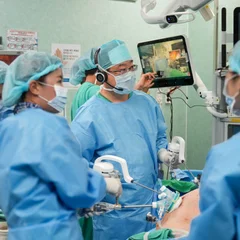
For frozen shoulder, most symptoms can be improved with conservative treatments such as stretching, physical therapy, medication, and injection therapy. However, if the pain persists or if there is severe movement restriction due to joint adhesion, surgical treatment may be considered. Surgery to incise the joint capsule through arthroscopy is rarely performed, but it is a method that allows direct observation of the inside of the joint through a small incision to remove inflammation and adhesion. It has the advantage of less pain and tissue damage compared to open surgery, and recovery is faster.
Stretching is essential for recovery. If you avoid using your shoulder due to pain, joint adhesion can worsen, delaying recovery. Applying a warm compress for about 20-30 minutes before stretching can help relax the muscles and joints, yielding better results.
Professor Kim Myung-seo of the Orthopedic Surgery Department at Gangdong Kyunghee University Hospital emphasized the importance of exercise, stating, "Patients who consistently perform warm compresses and stretching along with medication or injection therapy tend to recover faster and have a better prognosis."