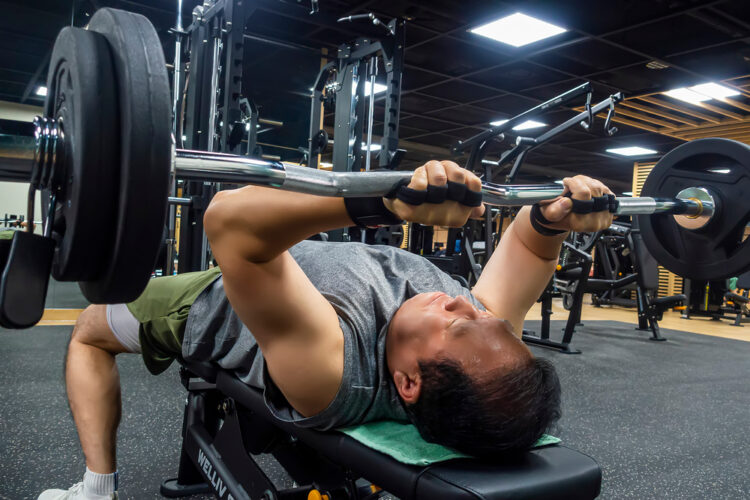
Just eating a lot of protein does not automatically increase muscle. The principle of muscle growth is that through 'strength training', repetitive micro-damage is inflicted on the muscles, and as that damage heals, muscle mass gradually increases.
Effective in the 20s and 30s, but changes after 50
Even when doing strength training, the results vary depending on 'age'. A meta-analysis of 36 studies (1682 participants) on adults aged 'over 50' regarding whether protein supplementation accompanying strength training helps increase strength and muscle mass found no significant difference between the protein supplementation group and the control group that did not supplement protein. In other words, those who are already consuming the recommended protein intake of 0.8g/kg/day do not gain any benefits from adding more protein [1].
The case for 'younger people' is a bit different. A meta-analysis of 49 related studies (1863 participants, average age 35±20 years) conducted by McMaster University in Canada found that protein supplementation accompanying strength training helped increase strength and muscle mass [2]. However, the effect was highest in the '20s and 30s', and as age increased to the 50s and 60s, the effect diminished .
Eating more than 1.6g/kg a day is useless
Even for young people who are diligently doing strength training, total protein intake exceeding 1.6g/kg/day did not provide any further benefits for muscle mass or strength improvement.
Those who can see effects from additional protein intake are limited to young athletes who consistently engage in 'strength training', and an additional intake of 1.6g/kg/day is sufficient, with any intake beyond that being unnecessary. For the general public who do not engage in much strength training, or for those aged 50 or 60, consuming protein above the daily recommended amount does not provide much help.
After middle age, there are several reasons why it is more difficult to increase muscle mass than when one was younger, with 'anabolic resistance' being a representative factor. As one ages, growth hormones (GH), IGF-1, mTOR, and sex hormones (testosterone, estrogen) that contribute to 'muscle growth' decrease, which is a natural part of the aging process [3].
The 'protein craze' that encourages the general public to consume a lot of protein for health improvement or to prevent muscle loss has minimal scientific basis and is overestimated. A diet excessively high in protein can lead to various chronic diseases such as diabetes, making it detrimental to health.
Side effects from long-term intake of protein above the recommended amount of 0.8g/kg/day include osteoporosis, kidney stones and decreased kidney function, liver function decline, angina, and increased cancer risk (breast cancer, colon cancer, prostate cancer) [4].
The End of the 'Protein Myth' Proven by Vegan Athletes
Vegetarianism is gaining global attention as a healthy diet. About 22% of the world's population practices vegetarianism, and 8% of elite athletes are vegetarians. Professional soccer players in the UEFA must consume at least five portions of fruits and vegetables (about the amount of five medium-sized apples) at least five days a week [5].
The saying, "You need to eat meat to gain strength," is losing its ground. Patrik Baboumian, a German who holds the Guinness World Record for being the strongest man in the world, is a strict vegan (see photo below). Just look at his biceps.
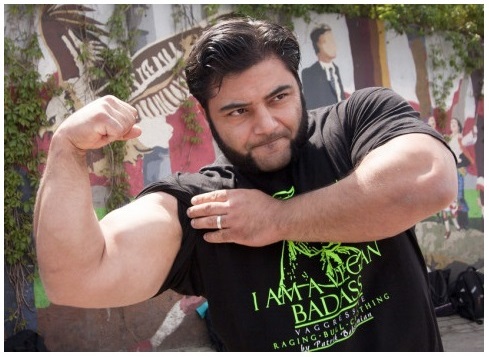
He successfully carried 555kg on his shoulders and moved 10 meters. At the moment he broke the world record at the competition, he shouted, "Vegan Power!" in front of the cheering crowd.
Baboumian was asked, "How can you be so strong like an ox without eating meat?"
He replied, "Do oxen eat meat?"
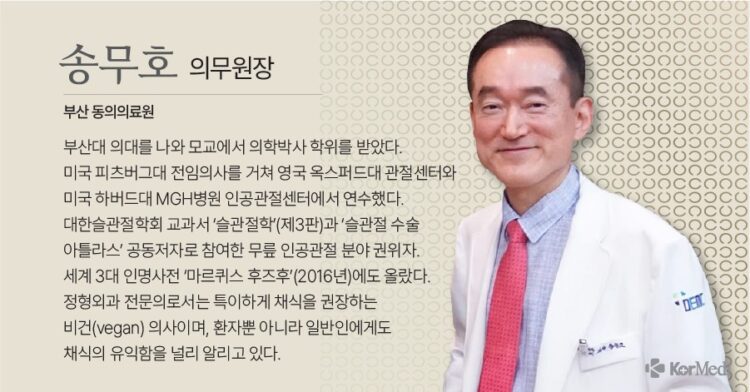
Song Mu-ho, MD, Orthopedic Specialist
References
1. DSM Ten Haaf, MAH Nuijten, MFH Maessen, et al. Effects of protein supplementation on lean body mass, muscle strength, and physical performance in nonfrail community-dwelling older adults: a systematic review and meta-analysis. Am J Clin Nutr 2018;108(5):1043-1059.
2. RW Morton, KT Murphy, SR McKellar, et al. A systematic review, meta-analysis and meta-regression of the effect of protein supplementation on resistance training-induced gains in muscle mass and strength in healthy adults. Br J Sports Med 2018;52:376–384.
3. C Tezze, M Sandri, P Tessari. Anabolic Resistance in the Pathogenesis of Sarcopenia in the Elderly: Role of Nutrition and Exercise in Young and Old People. Nutrients 2023;15(18):4073.
4. I Delimaris. Adverse effects associated with protein intake above the recommended dietary allowance for adults. ISRN Nutrition 2013;2013(1):126929.
5. J Collins, RJ Maughan, M Gleeson, et al. UEFA expert group statement on nutrition in elite football. Current evidence to inform practical recommendations and guide future research. British journal of sports medicine 2021;55(8):416-416.