

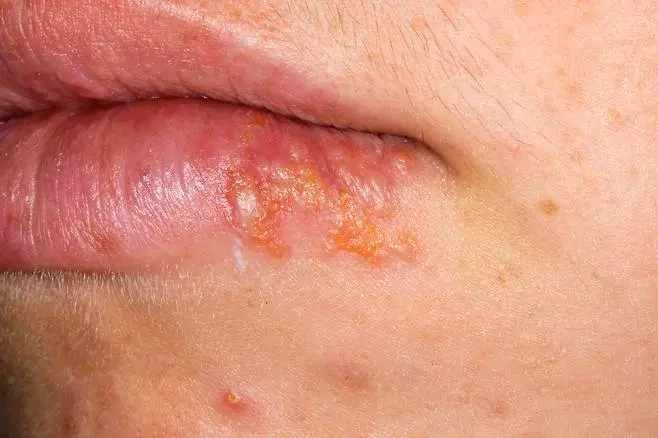
It is distressing to develop blisters around the lips before an important appointment. It seems to be due to a combination of stress and fatigue. If it recurs after having been treated last time, it adds to the stress. The virus lies dormant in the body and causes blisters at the corners of the mouth when one is tired. Medically, this corresponds to herpes simplex virus type 1. Let's learn more about this condition.
Cold, Fatigue Leading to Blisters on the Lips... What is Herpes Simplex Virus Type 1?
Herpes simplex is a disease caused by the herpes virus (human herpes viruses) that infects the skin and mucous membranes, primarily resulting in vesicles (blisters). There are two types of herpes simplex virus: type 1 and type 2. According to the Centers for Disease Control and Prevention, type 1 primarily causes infections above the waist, while type 2 primarily affects below the waist, especially the genital area. Herpes simplex type 1 typically causes blisters at the corners of the mouth during colds or when the body is fatigued. Herpes simplex type 2 virus infections mostly occur as genital herpes in the genital area.
Why Do They Keep Recurring... Even After Blisters Disappear, They Remain in Nerve Tissue
Once infected with the herpes simplex virus, the virus remains in the body even after the blisters disappear. It lies dormant in nerve tissue and can recur due to stress, inflammation, decreased immunity, or injury. It is not easily transmitted through the air, but can be contracted through physical contact with someone who has the virus in their bodily fluids or blisters. The virus invades through mucous membranes or skin wounds in areas such as the lips, mouth, throat, cervix, and conjunctiva of the eyes.
Itching Around the Lips as a Warning Sign... How to Respond?
Lip vesicles (blisters) can also occur on the nose, chin, cheeks, and oral mucosa. Before the blisters appear, symptoms such as itching, burning, and pain may occur, and recovery can happen within 6 to 10 days without leaving scars. According to the Centers for Disease Control and Prevention, the most commonly used antiviral medication is acyclovir. Both oral and injectable forms are available. For individuals with significantly reduced immunity, intravenous administration can reduce recovery time, pain duration, and the spread of the virus.
Recurrence is the Problem... If Signs Like Itching Appear, Treatment Should Be Prompt
Although acyclovir, an antiviral drug, is effective for treatment, it cannot prevent recurrence. Initial response and immune management are crucial for lip blisters. If warning signs like itching appear, one should suspect lip blisters. Since it occurs through direct skin contact and contact with secretions, caution should be taken to prevent transmission. Infection can be prevented by thorough hand washing and avoiding contact with secretions. No vaccine has yet been developed to prevent herpes simplex virus infections. If experiencing severe colds or high fatigue, it is advisable to avoid overexertion and rest.