Actress Seolhyun (Kim Seolhyun), former member of AOA, has started the Year of the Horse in 2026 healthily.
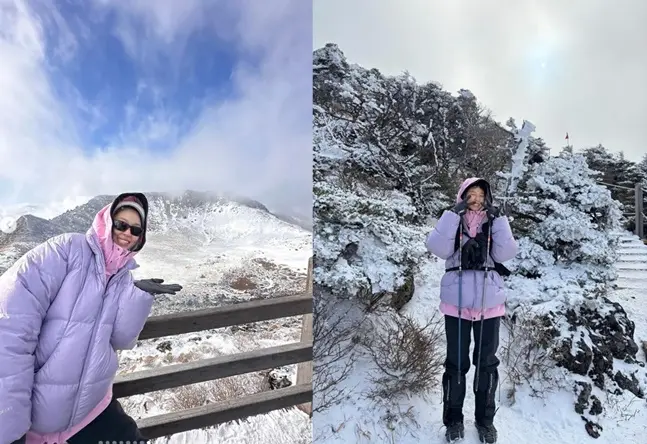
Recently, Seolhyun announced her hike up Hallasan on her social media (SNS) saying, "I visited Baengnokdam!" and expressed her pride, stating, "It was really, really hard, but I think it will be a moment I will remember for a long time." She added sweetly, "To those who see this photo, I hope you all achieve the wishes you have held onto for a long time this year."
The photos and videos she shared captured her climbing process. While climbing the snow-covered Hallasan, she was seen struggling at times with trekking poles in both hands, but finally, standing at the summit of 1950m, Seolhyun expressed her joy with a bright smile and lively pose. The weather was also favorable, with the blue sky, white clouds, and snow-covered Baengnokdam creating a picturesque landscape. Despite wearing multiple layers of hiking clothes for temperature control, her slim figure was impressive.
As a fitness enthusiast, Seolhyun has maintained her sleek figure through activities like climbing and hiking, with no excess fat to be found. During her time as a model for SK Telecom, she was referred to as the "Goddess of Proportions," and her enviable figure has become even slimmer, maintaining a height of 167cm and a weight of 47kg. This year, Seolhyun will appear in the Netflix series "Slowly Intense" alongside Song Hye-kyo and Gong Yoo. We will explore the benefits of Seolhyun's exercise and hiking, as well as precautions to take during winter hiking.
Hiking, Exercise, and Weight Loss Effects
Hiking is a full-body workout that helps strengthen muscles and improve cardiovascular function. It is particularly excellent for lower body muscles and cardiovascular health, and it also has significant stress-relief effects.
Hiking strengthens leg and core muscles and increases endurance. Uphill hiking stimulates cardiovascular function, while downhill hiking helps regulate blood sugar levels. Regular hiking is effective in preventing high blood pressure, diabetes, and alleviating osteoporosis. Hiking in nature increases the secretion of beta-endorphins, providing satisfaction and preventing depression. It also promotes serotonin production, effectively relieving stress.
The weight loss effects are also remarkable. Hiking is a full-body aerobic exercise that is more effective for weight loss than jogging or cycling. It burns 300-700 kcal in one hour, and the increase in muscle mass raises the basal metabolic rate, making it suitable for long-term dieting. For a person weighing 70kg, moderate-intensity hiking for one hour burns 300-400 kcal, while steep inclines can increase this to 500-600 kcal. A 2-3 hour hike can burn 600-1200 kcal. When combined with dietary control, the weight loss effect increases, and hiking uphill quickly and downhill slowly in intervals can burn 20-30% more calories.
To Prevent Knee Injuries
While hiking is beneficial, it can put stress on the knees. Particularly during descent, there is a higher risk of meniscus damage, so caution is needed. If the stride is too fast and weight shifts forward during descent, the impact on the knees is concentrated. Beginners or those over middle age may easily experience arthritis or ligament damage due to lack of strength. For those with knee arthritis, excessive hiking can worsen the condition.
To prevent injuries, remember three things: warm-up exercises, stride adjustment, and equipment use. Stretching for 10 minutes before hiking can help loosen the thighs and calves, and during uphill hiking, land on the entire foot, while during descent, touch the heel first slowly. Wear hiking shoes that stabilize the ankles and use trekking poles to distribute weight. The trekking poles should be of a length that allows the elbow angle to be at a right angle.
Beginners should gradually increase hiking time to reduce knee strain. It is also beneficial to strengthen leg muscles through regular walking or swimming, and if pain persists after hiking, seek medical attention.
Precautions for Winter Hiking
Hallasan Baengnokdam beckons hiking enthusiasts with its stunning winter scenery. This is why people brave the cold to climb it. However, winter hiking requires careful management of body temperature, slip prevention, and time management to prevent accidents.
Check the mountain weather forecast before departure and postpone if there is heavy snowfall or strong winds. Choose a course that matches your physical strength and it is recommended to hike in groups of three or more. Bring essential equipment as well. Wear moisture-wicking innerwear, layered with warm fleece and windproof, waterproof jackets, and maintain body temperature with hats, neck warmers, and thermal gloves. Spats that keep pants dry from snow are also useful. Waterproof, slip-resistant hiking boots, crampons, and trekking poles help prevent slipping, and bring a headlamp, thermos, hand warmers, and emergency food. For a backpack, do not exceed 30kg for an adult weighing 70kg, and also prepare a flashlight, raincoat, power bank, band-aids, ointments, pain relievers, and fever reducers.
Walking on snow takes 1.5 times longer than usual, so allow extra time and aim to descend two hours before sunset. Minimize sweating and adjust body temperature by putting on and taking off clothes, and frequently consume small amounts of high-calorie snacks like warm water and chocolate. Avoid strenuous hiking and take breaks in between. On icy ground, land on the entire foot with small strides and pay attention to knee protection during descent. Especially, avoid alcohol during winter hiking as it is very dangerous. In case of hypothermia, injury, or getting lost, check the GPS app and call 119 for help.