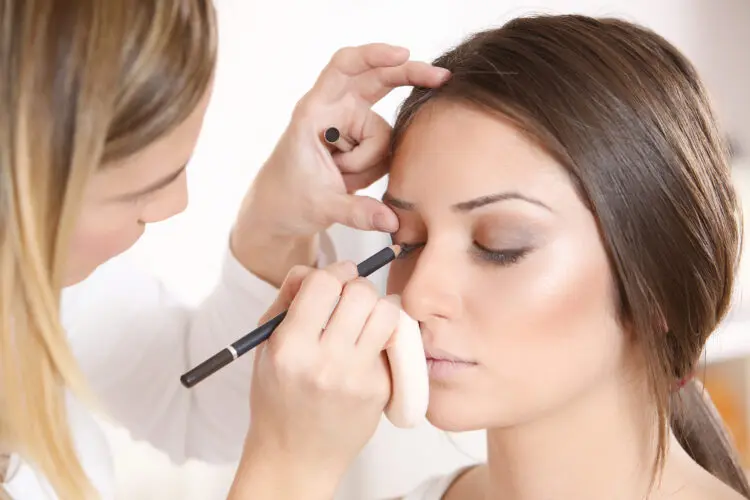
Everyone wants big, clear eyes. However, the more one desires to make their eyes look larger, the more it can negatively affect eye health. Recently, among patients visiting eye clinics, there has been an increase in complaints of eye irritation, foreign body sensation, and recurring inflammation rather than vision problems. Following the causes, it often turns out that the 'daily eye makeup habits' are the issue. The way cosmetics are used can place a greater burden on the eyes than the ingredients themselves.
Applying Eyeliner on the Inner Mucous Membrane is the Most Dangerous Choice
Many people fill in their eyeliner all the way to the inner mucous membrane to make their eyes look sharper. However, this area is where the oil glands that form the tear film are concentrated. Repeated contact with cosmetics can block these oil glands, deteriorating the quality of tears and leading to dry eyes or inflammation. Especially, the mucous membrane is more absorbent than the skin, making it more susceptible to irritation from cosmetic ingredients. Even if it doesn't show immediately, such irritation can accumulate, causing the eyes to become easily fatigued, often resulting in severe irritation by the afternoon. The desire for 'a little more clarity' becomes the biggest burden on eye health.
Be Cautious of Bacteria as You Apply More Mascara
The habit of applying mascara multiple times to make eyelashes look fuller also requires caution. The mascara brush repeatedly moves between the air and around the eyes, creating an environment conducive to bacterial growth. Continuing to use expired products or applying until clumps form can transfer bacteria directly to the eyes. Especially for those with sensitive eyes, just the mascara applied in the morning can cause redness or itching by the afternoon. This can lead to cases of conjunctivitis or eyelid inflammation. Hygiene should take precedence over the thought of 'it's a waste' when it comes to mascara.
Filling Between Eyelashes Accumulates Irritation
Tightline makeup that densely fills between the eyelashes makes the eyes look sharper, but it also leads to repeated friction and irritation. Especially when using liquid or gel-type products, tiny wounds can easily form on the skin. The skin around the eyes is the thinnest on the face, making recovery slower. Even small irritations can accumulate, leading to eyelid swelling, itching, and pigmentation. If your eyes feel particularly heavy on makeup days compared to non-makeup days, this subtle irritation may be the cause. Leaving natural spaces is beneficial for eye health in the long run.
The Most Important Process is Removing Eye Makeup
More problematic than the eye makeup itself is the habit of 'removing it carelessly.' Rubbing while cleansing due to fatigue can cause micro-damage to the eye surface and eyelids. Especially if waterproof products are removed without sufficiently moistening them, the risk of eyelash loss and eyelid inflammation increases. It is necessary to soak a cotton pad with eye-specific remover, press it gently for a moment, and then wipe it off softly with minimal force. The more tedious this process feels, the more easily the eyes become fatigued. The time spent removing makeup is also the time for the eyes to recover.
Do Not Ignore the Signals Your Eyes Send
If your eyes frequently become red or feel particularly irritated and foreign after applying makeup, it is a warning signal that should not be ignored. Continuing to apply makeup at this point can easily lead to chronic symptoms. Simply taking a break from eye makeup for a few days and checking if the symptoms improve can help identify the cause. Since the eyes are organs that are overworked all day, a balance is needed to allow them to rest as much as they are decorated. In the end, having comfortable eyes for a longer time makes a bigger difference than having bold eye makeup.