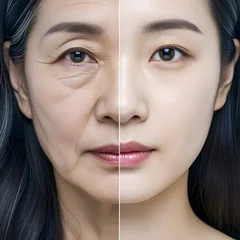

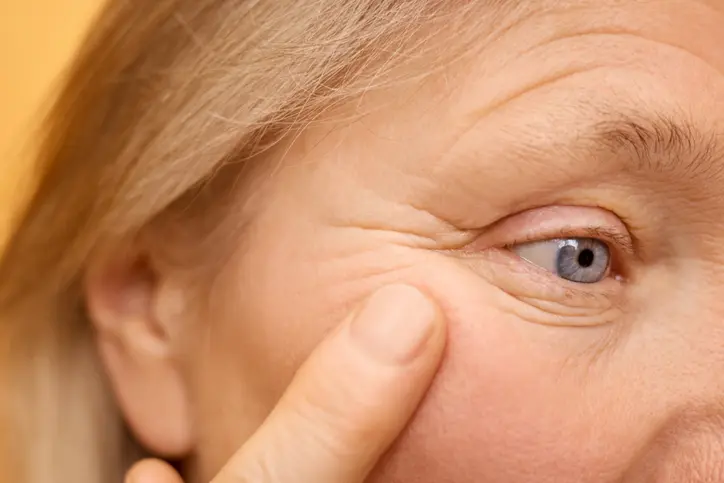
Looking older than your actual age is not simply due to skin wrinkles or blemishes. It may indicate that the biological age of the body is greater than the actual age. In particular, wrinkles around the eyes can be a sensitive biomarker as they reflect accumulated environmental damage.
According to a study published in the journal 《Alzheimer's Research & Therapy》, people with many wrinkles around their eyes are more than twice as likely to experience cognitive dysfunction compared to those with fewer wrinkles. Moreover, looking older than your actual age is a factor that increases the risk of dementia diagnosis by more than 60% over 12 years, even after considering factors such as health and lifestyle.
A research team from Fudan University in China analyzed health data from 195,329 British individuals aged 60 and over, collected over an average of 12 years as part of the UK Biobank study. Participants answered a survey question: 'Do people say you look younger than your actual age, older than your age, or about the same as your age?'
The results showed that after considering factors such as age, health, and lifestyle, those who responded that they looked older had a 61% higher risk of developing dementia compared to those who said they looked younger. For vascular dementia, the risk increased by 55%, and for dementia of unknown origin, the risk increased by 74%. This correlation was particularly pronounced among individuals who were obese, spent more time outdoors in the summer, and had a high genetic risk of developing Alzheimer's disease.
The researchers also tested the current cognitive abilities of participants, finding that those who reported looking older tended to have lower cognitive abilities. They scored lower on information processing speed and executive function tests and had slower reaction times.
The research team then showed photos of 612 elderly individuals from China to a panel of 50 independent evaluators and asked them to guess each participant's age. In addition to having the evaluators guess the age from the photos, the researchers used special imaging equipment to measure the number of wrinkles around the eyes. They also analyzed how prominently the wrinkles contrasted with the surrounding skin to measure the visibility or prominence of the wrinkles.
The study found that for participants who looked older than their actual age, the probability of cognitive impairment increased by 10% for each year they appeared older. The number of wrinkles measured by the equipment and the degree of contrast showed a particularly strong correlation with cognitive impairment.
The researchers explained, "Chronic diseases, as well as accumulated stress, DNA damage, inflammation, and hormonal changes can all manifest on a person's face. Chronic inflammation is one of the significant factors in the development of dementia. It causes neuronal damage, accelerates brain aging, and is a common element that connects various dementia risk factors."