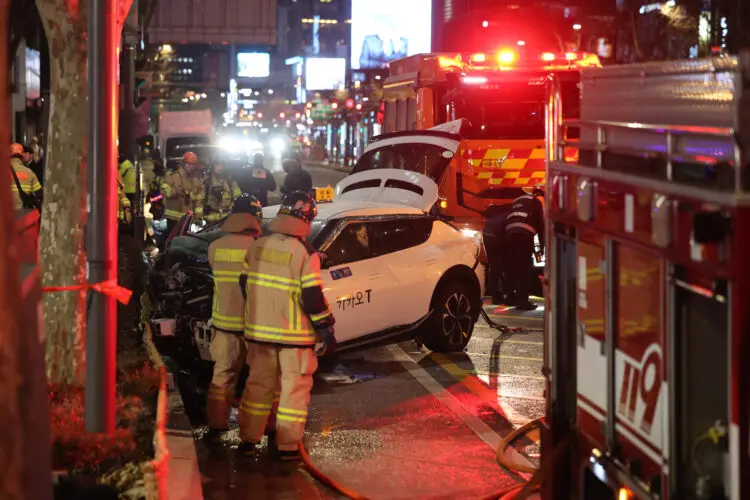
On the 2nd, a taxi driver in his late 70s caused a collision accident in front of Jonggak Station in Jongno-gu, Seoul, resulting in one death and over ten injuries. According to the police, it was reported that Mr. A tested positive for morphine in a drug screening, bringing renewed attention to the dangers of elderly driving and drug use while driving.
The morphine detected in Mr. A is a narcotic pain reliever primarily used to alleviate severe pain from serious trauma, cancer pain, or post-surgical pain. Cold medicine prescribed for chronic cough may also contain codeine, which is an opioid similar to morphine. Since codeine can act as morphine in the body, there is speculation that Mr. A may have been prescribed cold medicine.
Taking morphine can cause symptoms such as drowsiness and anxiety relief in addition to pain relief. Even if morphine is not present, psychoactive drugs such as antihistamines found in cold medicine, sleep aids, and anxiolytics can also cause drowsiness and muscle relaxation after consumption. If these symptoms occur while driving, concentration and reaction times can decrease, making it dangerous to drive immediately after taking such medications. This is why there have been ongoing calls for driving standards regarding medications that assist with neurological calming effects, such as those for panic disorders, depression, and attention deficit hyperactivity disorder (ADHD).
In fact, incidents presumed to be traffic accidents caused by drug use have been repeatedly occurring. Comedian Lee Kyung-kyu caused an accident last June while driving under the influence of panic disorder medication, crashing into a parked bus and a gas station wall. On the 31st of last month, a well-known female BJ in her 30s was charged with drug driving after crashing into a utility pole while driving after taking a sleep aid.
On the 2nd of this month, Mr. A, who caused an accident in downtown Seoul, was charged by the police with manslaughter under the Special Act on Traffic Accident Handling and drug driving under the Road Traffic Act.
Traffic accidents caused by drug driving occur every year. In 2023, there were 19 traffic accidents attributed to psychoactive drugs, resulting in 32 injuries, while in 2024, there were 52 accidents, leading to one death and 86 injuries. According to the Anti-Corruption and Civil Rights Commission, the number of license cancellations due to drug driving increased from 57 cases in 2019 to 113 cases in 2023, nearly doubling. Notably, traffic accidents caused by the use of medical narcotics totaled 322 cases over the past three years, which is higher than the 272 cases involving non-narcotic medical drugs and 39 cases involving illegal narcotics.
Starting in April of this year, the penalties for drug driving are expected to be strengthened. According to the recently amended Road Traffic Act, if a driver suspected of drug driving refuses to undergo testing, they will face imprisonment of up to five years or a fine of up to 20 million won. Penalties for violations of drug driving prohibitions will also be increased from imprisonment of up to three years or a fine of up to 10 million won to imprisonment of up to five years or a fine of up to 20 million won.