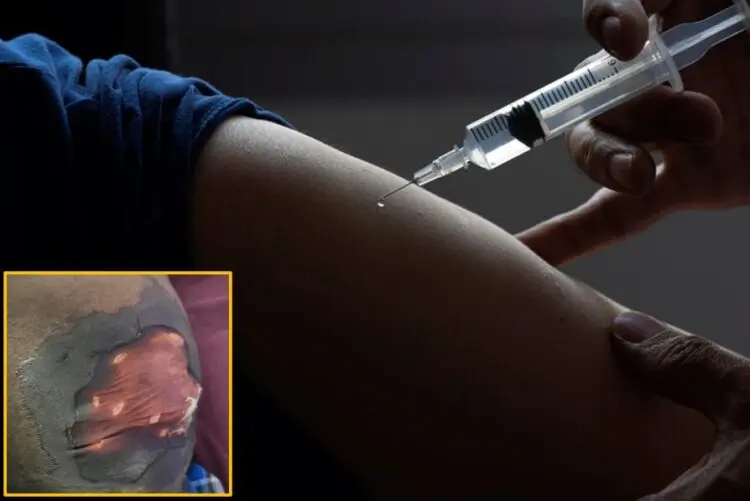
A rare case of extensive necrosis and ulceration of the skin at the injection site has been reported after the administration of a commonly used painkiller muscle injection. Medical staff warned that routine injection treatments can rarely lead to serious skin complications.
According to a recent report in the international journal 《Cureus》, the patient is a 51-year-old man who received a muscle injection of diclofenac, a non-steroidal anti-inflammatory drug (NSAID), in his buttocks after experiencing pain in both legs. The patient had no special abnormalities immediately after the injection, but pain at the injection site began about two hours later and worsened overnight into severe throbbing.
Subsequently, erythema appeared at the injection site, gradually turning black, with peeling skin and ulcers accompanied by pain. As the symptoms worsened, the patient sought medical attention.
Extensive Buttock Necrosis Confirmed... Nicolau Syndrome Diagnosed
Upon arrival, the patient's vital signs were stable, and his overall condition was relatively good. However, dermatological examination revealed extensive skin necrosis lesions approximately 10×15 cm in size on both buttocks. Peripheral pulses in the lower limbs were normal, and no major vascular occlusion was observed.
The medical staff considered infectious diseases such as necrotizing fasciitis and cellulitis as differential diagnoses, but after the rapid onset of pain following the injection and the subsequent clinical course leading to skin discoloration and necrosis, they diagnosed Nicolau syndrome.
After hospitalization, the patient began extensive intravenous antibiotic treatment, underwent marginal resection to remove necrotic tissue, and received daily wound dressing. The treatment responded well, and the necrotic tissue sloughed off, followed by re-epithelialization. The patient was discharged after receiving oral antibiotic prescriptions and wound care education, and is currently under outpatient follow-up.
A Rare Iatrogenic Disease Occurring After Injections, Nicolau Syndrome
Nicolau syndrome is a rare but serious iatrogenic (caused by medical treatment) disease that occurs after injection treatments such as muscle injections. It is characterized by severe pain and skin discoloration at the injection site, progressing to ischemia and tissue necrosis. Initially, it can be mistaken for simple post-injection pain, but as it progresses, it can lead to extensive skin damage, infections, and in severe cases, life-threatening complications such as sepsis.
This disease was first reported in the early 1920s after Nicolau and Prodenital administered bismuth salt injections for syphilis treatment. It is now known to occur not only after muscle injections but also after arterial, venous, intra-articular, and subcutaneous injections.
Nicolau syndrome is not limited to specific drugs. Various commonly used injectables, including NSAIDs, penicillin, steroids, vitamin K, and vaccines for immunization, have been reported as causes. Cases have also been reported following procedures such as hyaluronic acid fillers, mesotherapy, and sclerotherapy.
The exact mechanism of onset has not yet been clearly established, but major mechanisms proposed to cause ischemia and tissue necrosis include vascular spasms due to needle stimulation, embolism caused by viscous drugs, and vascular constriction after injection. In particular, diclofenac is known to be a cyclooxygenase (COX) inhibitor that suppresses prostaglandin synthesis and may contribute to the occurrence of Nicolau syndrome through its vasoconstrictive effects.
Early Recognition Influences Prognosis... Importance of Medical Staff Education
Nicolau syndrome can occur in various areas, including the thigh, arm, buttocks, abdomen, as well as the knee and shoulder. The researchers emphasized, "Injections are perceived as common and relatively safe treatments, but serious complications can occur rarely," and stated, "If there is abnormally severe pain or rapid skin color changes after injection, immediate evaluation is necessary."
They also added, "Although the pathophysiology has not been fully elucidated, early diagnosis and prompt treatment greatly influence prognosis," and stressed that education on proper injection administration principles and awareness of complications among frontline medical staff is crucial to reducing the occurrence of Nicolau syndrome.
[Frequently Asked Questions]
Q1. How rare is Nicolau syndrome?
A. Nicolau syndrome is a rare complication with a very low incidence, but it can occur after routine medical procedures such as muscle injections or dermatological treatments. Although rare, once it occurs, it can lead to severe complications such as tissue necrosis and infections, requiring special caution.
Q2. Is all pain after an injection a dangerous signal?
A. Normal post-injection pain can occur temporarily. However, if the pain is abnormally severe or rapidly worsens, and the skin color becomes pale or turns black, complications such as Nicolau syndrome should be suspected, and immediate evaluation by medical staff is necessary.
Q3. Are there ways to prevent Nicolau syndrome?
A. While no exact prevention methods have been established, it is important to adhere to proper injection techniques and closely monitor patients for abnormal reactions after injections. Visiting a hospital early if severe pain or skin changes occur after an injection can help prevent severe progression.