In winter, even if the desire to go to the mountains is the same, one must choose how to go. While trekking lightly and climbing to the summit may seem similar, the perceived difficulty and preparation standards are entirely different in winter. The problem arises when one sets out with the same preparations without recognizing this difference. In winter hiking, preparing differently according to the purpose is the beginning of safety.
Winter Trekking | It’s About ‘Surface Conditions’
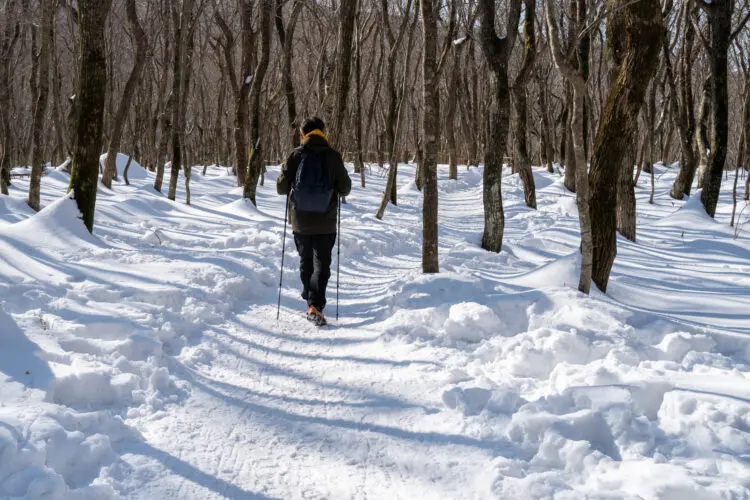
Winter trekking is a relatively easy mountain activity focused on gentle trails or forest paths. Although there is little change in altitude, physical exertion is low, but paths covered with snow, frost, or fallen leaves can be slippery. Therefore, while regular sneakers are possible for winter trekking, one should prioritize shoes with waterproof features and slip-resistant soles, as many sections may be wet or frozen. In areas with muddy paths where snow has melted or where leaves have accumulated, even a small slip can lead to a fall. Shoes with waterproof features will keep your feet warmer in areas where the snow has melted. Simply reducing your stride and slowing down can significantly increase safety.
Winter Climbing | Consider Altitude, Wind, and Body Temperature Management
Winter climbing aims to reach the summit, which means there are many variables. As altitude increases, the wind becomes stronger, and the perceived temperature drops sharply. Approaching with summer clothing or schedules can lead to rapid body temperature loss. Climbing boots that support the ankles are stable, and gloves, hats, and extra warm jackets are essential. Especially during rest periods, body temperature can drop rapidly, so preparations should be based on when you are ‘stopped’ rather than ‘walking.’ Just adding a windproof jacket can greatly reduce the perceived cold during your stay at the summit.
Criteria for Crampons | Trekking is Optional, Climbing is Essential Depending on the Situation
Crampons, often mentioned in winter hiking, are anti-slip equipment. However, they are not necessarily required for all winter hikes. If the trekking course is mostly flat, good traction shoes may be sufficient. In contrast, during winter climbing with many slopes or shaded areas, crampons significantly affect safety. The important thing is not whether you have them but whether you are prepared to use them according to the situation.
Criteria for Climbing Clothes | Layering is Key, Not a Thick Single Piece
The most common mistake in winter hiking is trying to solve body temperature with a thick single piece of clothing. During climbing, body temperature rises quickly, causing sweating, and the moment you stop, it drops sharply. The basic method is to layer functional innerwear, warm mid-layers, and windproof outerwear. This way, you can unzip while walking to release heat and add warmth immediately during breaks. Preventing the situation where sweat cools and takes away body temperature is the core role of winter climbing clothes. Having a configuration that allows you to take off and put on clothes according to the situation is much more important than just wearing many layers.
Time Planning | Starting Early is Basic for Both Trekking and Climbing
In winter, the days are short, and temperatures drop quickly in the afternoon. Whether trekking or climbing, starting earlier is the most realistic safety rule. Especially for climbing, it’s better to reduce the time spent at the summit and plan the schedule based on the descent time. Trekking also sees rapid temperature changes around sunset, increasing the perceived cold. Time management in winter hiking should be based on the environment rather than physical strength.
Beginner Selection Criteria | In Winter, ‘Trekking is a Safer Choice than Climbing’
If you are not familiar with winter hiking, it is better to start with trekking. You can enjoy the winter scenery sufficiently with short courses, busy paths, and accessible locations. It is more important to leave room for returning than to push yourself to reach the summit. Winter is a season to walk while observing the surroundings rather than rushing in the mountains. Even on the same mountain, the approach should change according to the purpose so that winter hiking remains a joy rather than a burden.