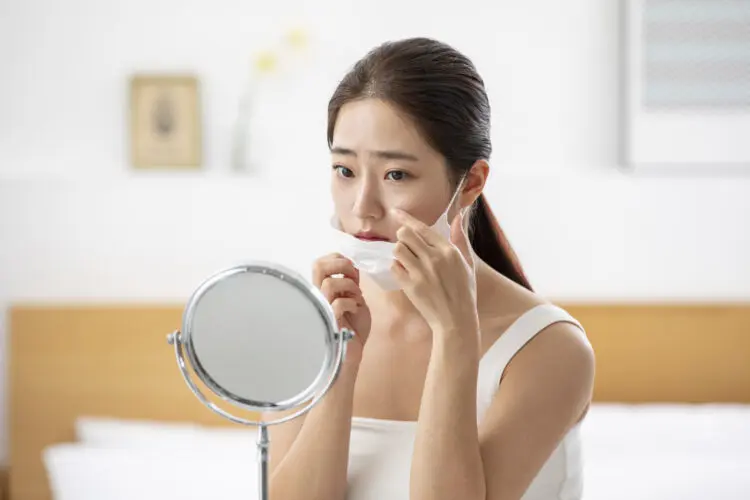
If you switched to a supposedly good cosmetic and suddenly experience milia, itching, or stinging, it is not something to dismiss as a simple 'adjustment period.' The skin always sends signals when it is uncomfortable. The problem arises when these signals are ignored, and continued use turns mild irritation into chronic trouble. Let's take a closer look at the warnings your skin sends when cosmetics are not suitable.
Stinging Right After Application, Not 'Absorption' but an Irritation Reaction
If your face feels hot or has a prickling sensation like being poked with a needle after applying new cosmetics, it is unlikely to be part of the absorption process. This is likely an early signal that the skin barrier has been irritated. Especially when exfoliating ingredients or high-functioning components overlap, the protective barrier of the skin may thin, leading to a painful sensation. If it does not disappear within 1-2 minutes and persists, it is safer to stop using it. Repeated irritation can make the skin increasingly sensitive, making it easier to react to products that previously posed no issues.
Milia and Pimple Outbreak, a Misconception of 'Detoxification'
After changing cosmetics, you may notice milia suddenly appearing on your forehead, chin, or around your cheeks. This is often misunderstood as 'detoxification' or 'skin purification,' but it is more likely a result of clogged pores or an imbalance in oil levels. If such changes occur after switching to cream or oil formulations, it is highly probable that they do not match your skin type. If it lasts more than two weeks or spreads, it should be seen as a signal of incompatibility rather than an adjustment period.
If Itchy Sensations Come First, It’s a Precursor to Inflammation
If you feel an urge to scratch even without visible trouble, it may indicate that an inflammatory response has already begun within the skin. Ingredients that seem 'mild,' such as fragrances, preservatives, or certain plant extracts, can be strong irritants for some individuals. Itching signifies that the skin recognizes external components as foreign substances. Continuing to use products in this state can easily lead to red spots, flaking, or contact dermatitis.
When Skin Becomes Dull, It’s a Sign of Compromised Recovery Ability
If you experience no trouble after changing cosmetics but notice that your face looks particularly dull and lacks vitality, it may signal that the skin's recovery rhythm has been disrupted. Incompatible ingredients can reduce moisture retention and repeatedly trigger minor inflammation, leading to a dull skin tone. In this case, instead of adding whitening or radiance products, it is best to minimize the number of products used and focus on hydration first. You should check if your skin feels comfortable.
“Should I Try It for a Few More Days?” Can Worsen Trouble
The most common mistake when cosmetics are unsuitable is the judgment of 'let's just try it a little longer.' Ignoring skin signals and continuing use can multiply the time it takes for recovery. If you notice any abnormal reactions, stop using it immediately and allow your skin to rest with a simple moisturizing routine for at least 3-5 days. The criterion for cosmetics should be 'is my skin comfortable?' rather than 'good ingredients.' Respecting the first signals your skin sends is the most reliable way to prevent trouble.