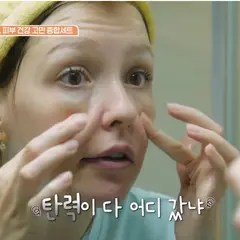
Every winter, many people experience their faces feeling particularly tight and their makeup becoming uneven in the office or at home. While most think it’s due to heating, the real culprit is the ‘ultra-low humidity environment’ where indoor humidity drops to around 20%. At this level of humidity, the skin barrier cannot retain moisture, leading to rapid dryness and exacerbating issues like roughness, sensitivity, and itching. Let’s explore why low indoor humidity in winter worsens skin condition.
‘Moisture Loss in Skin Increases by More Than 2 Times at 20% Humidity
Skin moisture naturally evaporates depending on the humidity in the air, and when humidity drops below 40%, moisture loss accelerates. In actual experiments, it has been reported that the amount of moisture evaporating from the skin surface in a 20% humidity environment was nearly double the average. If this condition persists, the lipid arrangement in the stratum corneum becomes disrupted, and the skin barrier develops micro-cracks, worsening tightness and roughness. In other words, ‘low humidity’ is a direct trigger for skin dryness.
When Barrier Lipids Collapse, Redness, Tightness, and Roughness Occur Simultaneously
As humidity decreases, barrier lipids such as ceramides and cholesterol are rapidly lost, causing the skin surface to begin to lift. A weakened barrier skin easily reacts to external stimuli, leading to redness or stinging, and even minor friction can cause trouble. Especially in dry environments with humidity in the 20% range, excessive keratin is produced overnight, often resulting in persistent tightness even after morning cleansing. The key background for sudden skin condition deterioration in winter is the collapse of barrier lipids.
Impact on Mucous Membranes and Respiratory System… ‘It’s Not Just the Skin That’s Dry’
When indoor humidity is too low, not only the skin but also the mucous membranes of the eyes, nose, and mouth become dry. When the nasal mucosa dries out, its ability to filter fine dust and bacteria decreases, the eyes become dry leading to increased irritation and fatigue, and the lips become dry and prone to cracking. The reason why lips and hand skin deteriorate together during the severely dry winter is this systemic dry response. Ultimately, a 20% humidity environment affects overall health beyond just skin issues.
Managing Indoor Humidity in Winter is Half of Skin Hydration
To maintain healthy skin, simply applying moisturizer is not enough; keeping indoor humidity between 40-60% is the most basic management. If using a humidifier is difficult, frequent indoor ventilation and utilizing natural humidifying elements like drying laundry or indoor plants can help. Applying moisturizer immediately after washing the face and using creams with barrier-strengthening ingredients can help reduce moisture loss. Ultimately, the starting point for skin health in winter is ‘indoor humidity’ rather than ‘moisturizers’.