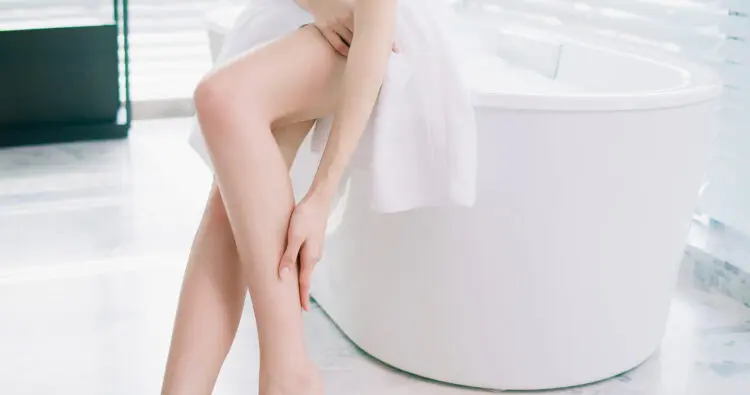
As heating begins in early winter, indoor humidity drops sharply, leading to the 'dead skin season' where areas with fewer sebaceous glands, such as legs, arms, and back, become white and flaky. Just a few minutes after showering, moisture quickly evaporates from the skin, causing tightness and dryness, and in cold weather, the skin's regeneration rate slows down. During this time, the skin on the body gets damaged before the face, so more detailed body care is needed than usual.
Lower the shower temperature to 'lukewarm'
Hot water quickly dissolves the skin's 'oil film' even in a short time, rapidly weakening the skin barrier. Lukewarm water at 36-38℃ minimizes damage to the protective barrier, and a short shower of about 8-10 minutes helps retain moisture in the skin. Especially in areas with fewer sebaceous glands like legs and arms, excessive cleansing can actually increase moisture loss, so it is effective to wash only the areas that sweat a lot and rinse the rest with lukewarm water.
3-Minute Moisturizing 'Golden Time' After Showering
Immediately after showering, the skin's ability to absorb external moisture is at its highest. Applying moisturizer within 3 minutes significantly prolongs moisture retention. It is good to apply lotion to create an overall moisture layer, and for severely dry areas like shins and upper arms, applying cream or oil once more creates a 'double moisture barrier'. Basic barrier ingredients like ceramides, shea butter, and glycerin work particularly effectively in early winter, and applying them again after absorption definitely increases the duration.
How to Enhance the Effect of Body Lotion and Oil
Rubbing the skin with a towel immediately after showering can irritate the dead skin layer, so the best method is to 'gently press to remove moisture'. The absorption of lotion increases significantly when the body is warm, so applying it right after showering is essential. For very dry areas like shins, layering lotion → cream → oil helps create a stronger protective barrier against external irritants. Increasing the use of body oil when dry signals (flaky skin, fine cracks) appear effectively reduces moisture evaporation.
Maintain Indoor Humidity of 40-55% for Good Moisturization
When heating is turned on, indoor humidity can drop to 25-30%, creating an environment where dead skin easily flakes off. The humidity range where the skin feels most comfortable is 40-55%, and maintaining this range significantly reduces morning tightness and itching. Without a humidifier, simple methods like drying laundry indoors, catching water in a basin, or using a mug for humidity can easily adjust the humidity. Especially in the bedroom, where heating has the most impact overnight, separate management is necessary.
Gentle Exfoliation Once a Week
Exfoliation helps moisturizers penetrate well, but in winter, skin irritation must be minimized. Using a scrub with fine granules or a low-irritation acidic exfoliant (AHA·PHA) once a week is sufficient. For rough areas like elbows, knees, and ankles, massaging in circles for about 30 seconds can have lasting improvement effects. Applying cream immediately after exfoliation reduces irritation and keeps the skin soft.
Focus on the Thickest Calluses on the Feet
Feet quickly harden and crack due to repeated pressure and friction throughout the day. The heels and soles should be treated with a cream high in oil content, and when calluses are severe, using products specifically for foot calluses helps soften hardened skin. However, excessive exfoliation can create fine cracks, so it is recommended to lightly tidy up once a week. Wearing cotton socks after moisturizing at night increases body temperature, doubling absorption.